Smart Ways to Use Common Sources to Prioritize Cyber Risk


Your security team sees a list of CVEs, but your board sees a list of expenses. Bridging that communication gap is one of the biggest challenges in our field. Simply presenting a long list of technical vulnerabilities with high severity scores isn't enough to justify budgets or align security with business goals. To get everyone on the same page, you have to tell a story that connects a specific weakness to a tangible business outcome, like operational downtime or financial loss. This guide will teach you how to build that narrative by pulling from the common sources to prioritize cyber risk, transforming your data into a compelling business case for proactive security.
Key Takeaways
- Connect Technical Risks to Business Outcomes: A high CVSS score means little on a non-critical asset. Prioritize vulnerabilities based on the importance of the affected system and real-world threat intelligence showing active exploitation.
- Pressure-Test Your Security Controls Continuously: A vulnerability scan identifies potential weaknesses, but Breach and Attack Simulation (BAS) confirms if an attacker could actually exploit them. Use it to validate that your security tools are configured correctly and are effective against real-world attack methods.
- Adopt a Continuous and Unified Security Model: Static, periodic risk assessments are no longer enough. A Continuous Threat Exposure Management (CTEM) program provides a living view of your security gaps by automating the discovery, prioritization, and validation of threats across your entire attack surface.
What Are the Main Sources of Cyber Risk?
To effectively prioritize cyber risks, you first need to know where they're coming from. Threats aren't one-size-fits-all; they can originate from sophisticated external groups, trusted insiders, software flaws, or simple human error. Understanding these distinct sources is the first step toward building a resilient defense strategy. Let's break down the main categories you'll encounter.
External Threats
External threats are what most people picture when they think of a cyberattack: malicious actors outside your organization trying to break in. The landscape of these threats is constantly shifting, but some familiar challenges persist. Major cyberthreats include ransomware, widespread vulnerabilities, phishing campaigns, and malware distribution. You also have to contend with distributed denial-of-service (DDoS) attacks that can cripple your services, complex supply chain attacks, and business email compromise (BEC) scams. These attackers are often organized, well-funded, and persistent, making a strong perimeter and continuous monitoring of your total attack surface essential.
Internal Threats
Not all threats come from the outside. Insider threats originate from individuals with legitimate access to your systems, like current or former employees, contractors, or partners. These internal actors can pose a significant danger because they are already inside your network with access to sensitive data and intellectual property. According to one recent report, a staggering 83% of organizations experienced at least one insider attack in the last year. These incidents aren't always malicious; they can stem from simple negligence or human error. But whether intentional or accidental, the potential for damage is high because the actor already has a foothold within your environment.
Technology-Based Risks
Your technology stack itself can be a major source of risk. Flaws and vulnerabilities in software, hardware, and network configurations create entry points for attackers. Malware remains one of the most common types of cyberattacks, acting as an umbrella term for everything from ransomware and trojans to spyware and keyloggers. These malicious programs are often delivered through other attack vectors. For example, a convincing phishing email might carry an attachment, like a fake invoice, that unleashes malware once opened. Effectively managing vulnerabilities across your entire tech environment is critical to closing these doors before an attacker can walk through them.
Human-Centric Vulnerabilities
Technology can be patched, but human behavior is harder to control. Human-centric vulnerabilities exploit our natural tendencies to trust and respond. Phishing is the classic example, where an attacker tries to trick someone into providing sensitive information like account credentials. A more targeted version of this is spear phishing, which uses personalized details to make the scam more believable, often aiming at specific individuals or organizations to steal sensitive data. These attacks succeed by manipulating people, not just code. While security awareness training is important, building a security culture that encourages caution and verification is the most effective way to counter these social engineering tactics.
How to Assess the Business Impact of Cyber Risks
Understanding a vulnerability's technical severity is one thing, but grasping its potential impact on your business is what truly matters. To effectively prioritize, you need to connect technical risks to tangible business outcomes. This means looking beyond the code and into your balance sheets, operational workflows, and brand reputation. By assessing the potential damage in these key areas, you can create a risk-based strategy that protects what's most important to your organization.
Assessing Financial Impact
The financial fallout from a cyber incident goes far beyond the immediate costs of remediation and regulatory fines. You also have to account for indirect costs like lost revenue from downtime, increased insurance premiums, and the long-term expense of rebuilding customer trust. When you quantify the cost of cyber risks, you can perform a more accurate cost-benefit analysis for security investments. This helps you justify your budget by showing how proactive measures are far less expensive than recovering from a breach. It’s about framing security not as a cost center, but as a protector of revenue.
Analyzing Operational Disruption
A successful attack can bring your operations to a grinding halt. Imagine critical systems going offline, supply chains being disrupted, or customer-facing services becoming unavailable. These aren't just technical problems; they are significant business disruptions that can stop you from delivering products or services. A core part of any effective risk management strategy is to understand the operational impacts of cyber risks on your specific business units. By mapping vulnerabilities to critical business processes, you can better understand which threats could cause the most harm to your day-to-day functions and prioritize them accordingly.
Evaluating Reputational Damage
Your company's reputation is one of its most valuable assets, and a cyberattack can shatter it in an instant. The loss of customer trust following a data breach is often the most lasting and damaging consequence. Research shows that successful attacks can directly decrease shareholder wealth, signaling a loss of confidence from the market. This is why it's so important to disclose how cyber risks are factored into your overall business strategy. When you evaluate a risk, consider its potential to erode brand loyalty and public perception. This long-term damage can be far more costly than any immediate financial or operational hit.
How to Decide Which Risks to Tackle First
Once you have a handle on the potential risks, the next question is always, "Where do we start?" With thousands of vulnerabilities and a finite amount of time and resources, you can't fix everything at once. Trying to do so is a fast track to burnout and ineffective security. The key is to move from a reactive, "patch-everything" mindset to a strategic, risk-based approach. Think of it as a triage system for your digital assets. You’re not just looking at a technical severity score; you’re focusing on the threats most likely to happen and cause the most damage to your specific business.
Effective vulnerability and threat prioritization is about adding business context to technical data. It means understanding which assets are most critical, which vulnerabilities attackers are actively exploiting, and what your unique industry and regulatory landscape looks like. By layering these factors, you can create a clear, defensible roadmap for remediation. This approach allows your team to focus its energy on the fixes that truly matter, reducing the most significant risks to the organization first and demonstrating clear value to leadership.
Asset Criticality and Business Value
Before you can prioritize risks, you need to know what you’re protecting. Not all assets are created equal. A vulnerability on a server that hosts your customer database or processes payments is far more critical than a similar flaw on an internal marketing blog. This is why the first step is always to identify your "crown jewels"—the systems, data, and applications that are essential for your business to operate and generate revenue.
Cyber risk prioritization is about figuring out which threats are most important to fix first based on their potential business impact. Map your assets and assign a business value to each one. Consider factors like financial revenue, operational importance, and the sensitivity of the data it holds. When a new vulnerability appears, you can immediately assess its true risk by looking at the criticality of the affected asset. This context helps you answer the most important question: "If this asset goes down, how badly does it hurt the business?"
Threat Likelihood and Frequency
A vulnerability’s technical score, like its CVSS rating, is a useful starting point, but it doesn’t tell the whole story. A flaw with a perfect 10.0 score is only a theoretical problem until an attacker figures out how to exploit it. On the other hand, a vulnerability with a 7.5 score that is being actively used in ransomware campaigns is a clear and present danger. This is where threat intelligence becomes your most powerful tool.
It’s crucial to know which weaknesses hackers are actually using right now. By integrating real-time data on active exploits, malware campaigns, and attacker trends, you can focus on the vulnerabilities that pose an immediate threat. Check for updated threat advisories that detail which vulnerabilities are being exploited in the wild. This intelligence allows you to separate the theoretical risks from the imminent ones, ensuring your team is spending its time putting out fires that are already burning, not just the ones that could potentially start.
Industry-Specific Risk Considerations
Every industry faces a unique set of threats and pressures. A healthcare organization’s biggest concern might be protecting patient data to comply with HIPAA, while a financial institution will focus on securing transaction systems and preventing fraud. The type of data you handle, the services you provide, and the adversaries who target your sector all shape your risk profile. Understanding this context is essential for making smart prioritization decisions.
For example, manufacturing companies are increasingly targeted by ransomware groups aiming to disrupt operations, making vulnerabilities in OT and ICS systems a top priority. For retailers, protecting e-commerce platforms and customer payment information during peak shopping seasons is paramount. Your industry often dictates which assets are most valuable and which threat actors are most likely to attack them. This specialized view helps you fine-tune your priorities beyond generic best practices.
Regulatory and Compliance Requirements
Compliance isn't just about checking boxes; it's a significant driver of risk. Failing to meet regulatory standards like GDPR, HIPAA, or PCI DSS can result in steep fines, legal action, and serious reputational damage. A vulnerability that could lead to a compliance violation automatically carries a higher level of business risk, regardless of its technical severity. These risks are often easier to quantify and communicate to leadership because they come with a clear price tag.
When prioritizing, you must consider how cyber risks impact your organization's business strategy and compliance posture. Disclosing these risks is becoming a standard part of corporate governance. Therefore, vulnerabilities that threaten regulatory compliance should be high on your remediation list. Integrating compliance requirements into your risk calculations ensures you’re not only protecting the business from attackers but also from costly legal and financial penalties. A unified platform like Uni5 Xposure can help you see these connections in one place.
Which Frameworks and Tools Help Identify Cyber Risks?
You don’t have to reinvent the wheel when it comes to identifying and managing cyber risks. Security professionals have developed several excellent frameworks and tools to bring structure and clarity to the process. These resources provide a common language and a systematic approach, helping you move from a reactive stance to a proactive strategy. By adopting these established methods, you can ensure your efforts are comprehensive, consistent, and aligned with industry best practices. This makes it easier to communicate risk to stakeholders and build a more resilient security posture.
NIST Cybersecurity Framework
Think of the NIST Cybersecurity Framework (CSF) as a comprehensive guide for managing your organization's cybersecurity risks. It’s not a rigid, one-size-fits-all mandate but a flexible structure that you can adapt to your specific needs and goals. The framework is organized around five core functions: Identify, Protect, Detect, Respond, and Recover. This structure provides a high-level, strategic view of your cybersecurity risk management lifecycle. By using the CSF, you can effectively identify your most critical assets and the associated risks, giving you a clear roadmap for implementing protective measures and planning your response strategies. It helps create a common language for everyone, from the security team to the boardroom.
MITRE ATT\&CK Framework
While NIST provides the "what," the MITRE ATT\&CK framework gives you the "how" from an attacker's perspective. It’s a globally accessible knowledge base of adversary tactics and techniques based on real-world observations. Instead of just listing vulnerabilities, ATT\&CK maps out the specific steps an attacker might take to compromise your network, from initial access to data exfiltration. This insight is incredibly valuable for threat hunting, detection engineering, and red teaming exercises. By understanding how adversaries operate, you can better test your defenses, identify gaps in your security controls, and focus your resources on mitigating the techniques most likely to be used against you.
FAIR Risk Analysis Methodology
One of the biggest challenges in cybersecurity is translating technical risk into business impact. This is where the Factor Analysis of Information Risk (FAIR) methodology comes in. FAIR is a model that helps you quantify cyber risk in financial terms. By breaking risk down into measurable factors like threat event frequency and probable loss magnitude, you can have more meaningful conversations with leadership. Instead of talking about abstract vulnerabilities, you can discuss the potential financial fallout of a data breach in dollars and cents. This approach helps leaders make more informed, data-driven decisions about where to invest in security controls and how to prioritize risk management efforts.
Automated Vulnerability Scanners
Frameworks and methodologies give you structure, but automated vulnerability scanners are the tools that do the heavy lifting on the ground. These scanners continuously check your systems, applications, and networks for known weaknesses, such as unpatched software or misconfigurations. They are essential for quickly and efficiently identifying vulnerabilities across your entire attack surface. The output from these tools provides a constant stream of data that feeds your vulnerability management program. When integrated into a Threat Exposure Management Platform, this data becomes even more powerful, allowing you to prioritize remediation based not just on a technical severity score but on the actual threat it poses to your organization.
How Threat Intelligence Transforms Risk Prioritization
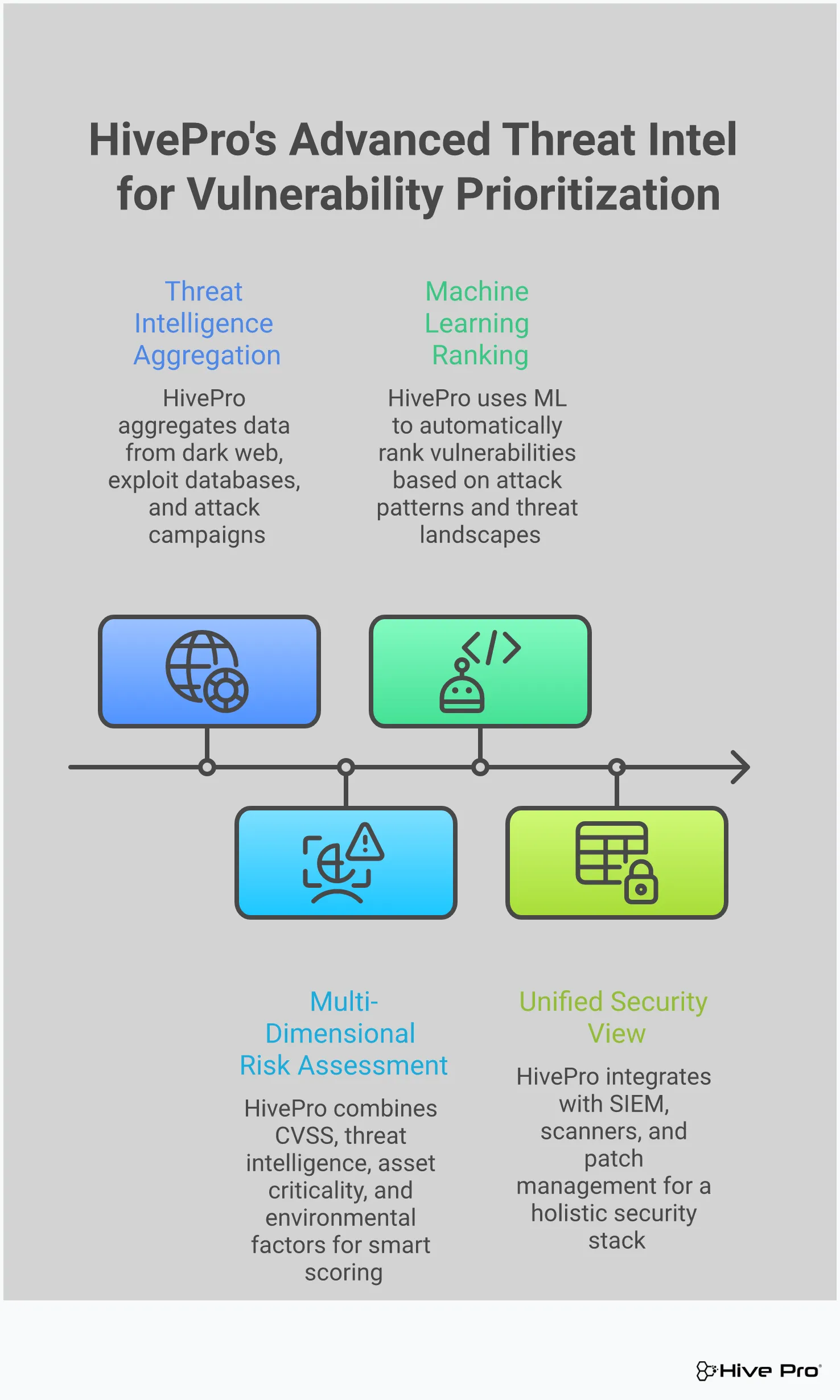
A long list of vulnerabilities can feel overwhelming, but not all risks are created equal. This is where threat intelligence changes the game. Instead of treating every vulnerability as a top priority, you can use real-world data about active threats to focus your efforts where they matter most. By understanding what attackers are doing right now, you can move from a reactive posture to a proactive strategy, addressing the exposures that pose a genuine and immediate danger to your organization. This approach sharpens your focus, saves valuable time, and makes your entire vulnerability management program more effective.
Integrating Real-Time Threat Data
Your vulnerability scanner might flag thousands of issues, but only a small fraction are likely to be exploited in the wild. Threat intelligence cuts through that noise by providing real-world information about what hackers are doing. It helps you see what's actively being exploited, shifting your perspective from simply knowing a weakness exists to knowing if attackers are using it right now. This real-time insight is crucial for effective vulnerability and threat prioritization, allowing your team to concentrate on patching the holes that are most likely to be targeted, rather than getting lost in a sea of low-risk CVEs.
Tracking Vulnerability Exploitation Trends
Cybercriminals are constantly evolving their methods. An exploit that was popular last year might be replaced by a new technique tomorrow. Tracking vulnerability exploitation trends helps you understand these shifts. For example, you might notice a rise in specific phishing campaigns or a new strain of ransomware gaining traction. By monitoring these developments, often detailed in threat advisories, you can anticipate which of your vulnerabilities might become prime targets. This foresight allows you to patch weaknesses proactively before they become the focus of a widespread attack, keeping you a step ahead of your adversaries.
Recognizing Attack Patterns
Understanding how attackers operate is just as important as knowing what they target. Threat intelligence helps you recognize common attack patterns and the specific tactics, techniques, and procedures (TTPs) that adversaries use. For instance, you can learn how a malware attack typically unfolds, from initial access to data exfiltration, or how a whaling attack targets senior executives with highly specific social engineering. By mapping these patterns to frameworks like the MITRE ATT\&CK Framework, you can better predict an attacker’s next move and strengthen the controls at each stage of a potential attack chain.
Applying Contextual Risk Scoring
A standard CVSS score doesn't tell the whole story. A vulnerability on a non-critical test server is less of a concern than the same vulnerability on your primary customer database. Contextual risk scoring combines threat intelligence with business context to create a more accurate picture of risk. It considers factors like asset criticality, potential operational disruption, and even indirect costs like reputational damage. The loss of customer trust can be profoundly consequential. A unified exposure management platform helps apply this context, ensuring your risk scores reflect the true potential impact on your business.
Why Breach and Attack Simulation Is Essential for Vulnerability Management
Vulnerability scans are great at telling you what’s broken, but they don’t tell you if your defenses can actually stop an attack. That’s where Breach and Attack Simulation (BAS) comes in. Think of it as a continuous, automated way to pressure-test your security posture. Instead of just identifying potential weaknesses, BAS actively tries to exploit them in a safe, controlled environment. This approach helps you move from a theoretical understanding of risk to a practical one, showing you not just where the holes are, but whether an attacker could actually get through them.
By simulating the latest attack techniques, you can see exactly how your security controls would perform against a real adversary. This process validates whether your firewalls, EDRs, and other tools are configured correctly and are actually effective. It’s a crucial step in building a proactive defense because it answers the most important question: "Are we secure right now?" A strong BAS program doesn't just find problems; it confirms that your security solutions are working as intended. With a platform that includes adversarial exposure validation, you can continuously test your defenses against the threats that matter most, ensuring your security investments are delivering real value and protecting your critical assets.
Validating Security Controls Under Attack Conditions
Your security stack is only as good as its configuration and its ability to work under pressure. BAS tools act like a friendly, in-house red team that constantly tests your defenses. They safely run simulated attacks on your systems to see if your security tools, like firewalls and endpoint protection, actually work as expected. It’s one thing to have a security control in place; it’s another to know for certain that it will block a specific attack technique. By running these simulations, you can confirm that your controls are not only deployed but are also effective against the tactics real attackers use.
Testing Real-World Attack Scenarios
Threat actors don’t operate in a vacuum, and neither should your testing. BAS allows you to move beyond generic vulnerability checks and test your environment against specific, real-world attack scenarios. By leveraging up-to-date threat intelligence, you can simulate the exact tactics, techniques, and procedures (TTPs) used by active threat groups. For example, you can test your defenses against the latest ransomware strain or a newly discovered exploit chain. This helps you verify your assumptions about risk. If a simulated attack gets through, you have concrete proof that a particular risk needs to be a higher priority.
Identifying Critical Exposure Gaps
Some of the most dangerous risks aren't single, critical-rated vulnerabilities but a chain of smaller, seemingly low-risk exposures that an attacker can link together. Traditional vulnerability scanners often miss these complex attack paths. Breach and Attack Simulation excels at uncovering these critical gaps. By simulating a multi-stage attack, BAS can reveal how an adversary could move laterally across your network, escalate privileges, and reach sensitive data. This helps you see your environment from an attacker's perspective and identify the hidden pathways that could lead to a major breach.
Measuring Actual Risk Impact
One of the biggest challenges in vulnerability management is communicating risk to leadership in a way that resonates. BAS helps you bridge that gap by providing tangible evidence of impact. Instead of saying a vulnerability could lead to a data breach, you can show that a simulated attack did successfully access a critical database. By running these simulations, you can measure the actual impact of a potential breach, providing a much clearer picture of the risks you face. This data-driven approach makes it easier to justify security investments and prioritize remediation efforts based on demonstrable business impact.
How to Build a Dynamic Risk Prioritization Matrix
Static spreadsheets and once-a-quarter risk assessments just don’t cut it anymore. The threat landscape moves too fast. A dynamic risk prioritization matrix is a living document that evolves with your environment and the threats targeting it. Instead of relying on a single, often misleading, metric like a CVSS score, this approach combines multiple data points to create a true, contextualized picture of your risk.
Think of it as a triage system for your company's digital security. It's about figuring out which security threats are most important to fix first. You can’t fix everything at once, so you focus on the ones that are most likely to happen and could cause the most damage. A dynamic matrix helps you do just that by continuously re-evaluating threats based on new information. This method moves you from a reactive posture to a proactive one, allowing you to address the most critical issues before they can be exploited. Building an effective matrix involves layering several key components to ensure your vulnerability and threat prioritization is sharp, accurate, and aligned with your business goals.
Using Multi-Factor Scoring
The first step in building a dynamic matrix is to move beyond single-factor scoring. A high CVSS score on a non-critical, internally-facing test server is far less concerning than a medium-severity vulnerability on your customer-facing payment portal. Multi-factor scoring brings this necessary context into the equation. It combines technical severity with other critical data points, such as asset importance, threat likelihood, and the potential business impact of an exploit. By creating a composite score, you get a much more realistic view of which vulnerabilities pose a genuine threat to your operations. This approach helps you focus your team’s limited time and resources on the problems that truly matter.
Weighting by Business Impact
To get buy-in from leadership and justify your security efforts, you have to speak their language. Weighting risks by business impact does exactly that by translating technical vulnerabilities into financial and operational terms. How much revenue would be lost per hour if a critical application goes down? What are the potential fines or reputational costs associated with a breach of a specific database? By quantifying the potential damage, you can clearly demonstrate the return on investment for remediation efforts. This helps everyone, from the security team to the C-suite, understand which fixes provide the most value and protect the most critical business functions.
Integrating Threat Intelligence
A vulnerability is a potential problem; a vulnerability being actively exploited is an immediate crisis. Integrating threat intelligence is what separates a theoretical risk assessment from a real-world defense strategy. This means feeding your matrix with up-to-the-minute data on which vulnerabilities are being targeted by attackers, the tactics they’re using, and which malware campaigns are in play. This real-time context from sources like HiveForce Labs allows you to see what hackers are actually doing right now. Instead of just knowing a weakness exists, you know if it’s a popular target, helping you prioritize the threats that pose an imminent danger.
Automating Risk Score Updates
A dynamic matrix can't be updated manually; the sheer volume of data makes it impossible. Automation is the engine that keeps your risk prioritization current and effective. By using a platform that can automatically process huge amounts of security data, you can ensure your risk scores update in near real-time. As new threat intelligence emerges, asset values change, or new vulnerabilities are discovered, an automated system recalculates and re-prioritizes for you. This frees up your team from tedious data crunching, allowing them to focus on strategic decision-making and remediation. A modern threat exposure management platform makes this continuous, automated risk assessment possible.
The Role of Continuous Threat Exposure Management
Static, once-a-quarter vulnerability scans just don’t cut it anymore. A Continuous Threat Exposure Management (CTEM) program shifts your security posture from reactive to proactive. Instead of just identifying vulnerabilities, CTEM creates a continuous feedback loop: you discover your attack surface, prioritize threats based on real-world intelligence, validate your defenses, and mobilize your teams to fix what matters most. This approach gives you a living, breathing view of your security gaps and a clear path to reducing them. A comprehensive threat exposure management platform brings all these moving parts together, so you can stop guessing and start taking confident action based on a unified view of your cyber risks.
Monitoring the Full Attack Surface
You can't protect what you can't see. The first step in any solid security program is getting a complete and continuous picture of your entire attack surface. This means identifying every single asset your organization owns, from servers and laptops to cloud instances and IoT devices. Using tools for vulnerability scanning and exercises like penetration testing are essential for monitoring the full attack surface. This isn’t a one-and-done audit; it’s an ongoing discovery process. As your environment changes, new assets come online, and shadow IT pops up, you need a system that keeps your inventory current so nothing falls through the cracks and becomes an unmonitored entry point for attackers.
Discovering Vulnerabilities Proactively
Once you know what assets you have, the next step is to find their weaknesses. But not all vulnerabilities are created equal. This is where threat intelligence becomes your best friend. It gives you real-world information about what hackers are doing right now, helping you see what’s actively being exploited in the wild. This context allows you to focus your efforts on the most dangerous threats to your business. Instead of drowning in a sea of CVEs, your team can proactively address the vulnerabilities that pose an immediate danger. The intelligence from research teams like HiveForce Labs provides the critical context needed to separate theoretical risks from imminent threats.
Assessing Risk in Real-Time
Your organization’s risk posture isn't a static number; it changes every time a new threat emerges, a new asset is added, or a patch is deployed. A CTEM approach moves you away from periodic assessments to a real-time view of your security status. Modern tools can help bridge the gap between technical teams and business leaders by translating complex security data into clear business and financial terms. This dynamic approach to vulnerability and threat prioritization ensures that your understanding of risk is always current. It allows you to make faster, better-informed decisions and communicate the value of your security efforts to stakeholders in a language they understand.
Guiding Exposure Reduction
Identifying problems is only half the battle. The ultimate goal is to reduce your exposure. A strong CTEM program provides clear, actionable guidance on what to fix first. It’s about figuring out which security issues are most important to address now, focusing on the biggest threats to keep your systems safe. This means your security and IT teams aren't just handed a massive list of vulnerabilities; they get a prioritized roadmap for remediation. By focusing on the fixes that will have the greatest impact on your security posture, you can guide exposure reduction efforts effectively and make the best use of your team's limited time and resources.
How to Overcome Common Prioritization Challenges
Even with the right sources and frameworks, turning data into a clear action plan can be tough. Prioritization isn't a one-time task; it's a continuous process that comes with its own set of hurdles. From drowning in alerts to getting everyone on the same page, these challenges are common, but they aren't insurmountable. Let's walk through how to handle them.
Managing Alert Overload and Fatigue
Security teams are often overwhelmed by thousands of alerts every day. When everything is flagged as urgent, it’s easy to fall into a reactive cycle, fixing what’s loudest or seems easiest rather than what truly threatens the business. This approach leads to wasted effort and leaves critical risks unaddressed. The key is to cut through the noise with intelligent vulnerability and threat prioritization. Instead of treating every alert equally, a focused strategy helps you identify which vulnerabilities pose a clear and present danger, allowing your team to concentrate their energy where it will have the most impact.
Bridging Communication Gaps Between Teams
Your security team understands the technical details of a vulnerability, but does the C-suite? A major challenge is translating technical risk into business impact. When you can explain that a specific vulnerability could lead to a quantifiable financial loss or disrupt a key business operation, the conversation changes. Framing cybersecurity in terms of business outcomes helps justify budgets and aligns security initiatives with organizational goals. A unified view of cyber risks that clearly communicates potential impact helps get everyone, from the server room to the boardroom, on the same page and working toward the same protective goals.
Adapting to Evolving Threat Landscapes
The threat landscape changes by the minute. A vulnerability that was low-risk yesterday could be actively exploited by attackers today. Relying solely on static metrics like CVSS scores for prioritization is a recipe for falling behind. This is where threat intelligence becomes a game-changer. By integrating real-world data on what attackers are actually doing, you can see which vulnerabilities are being targeted in the wild. This context allows you to adapt quickly and focus your remediation efforts on the threats that are most likely to affect you right now, informed by up-to-date threat advisories.
Aligning Technical and Business Priorities
Effective cyber risk prioritization happens at the intersection of technical data and business context. A critical vulnerability on a non-essential internal server is less of a priority than a moderate one on your primary e-commerce platform. To make the right call, you need to combine technical severity with an understanding of asset criticality, potential financial impact, and real-world threat data. This holistic approach ensures your security efforts are directly tied to protecting what matters most to the business. It moves your program from a simple checklist of patching to a strategic defense of your core operations.
Which Tools Can Automate Risk Prioritization?
Trying to manually sift through thousands of vulnerabilities is an impossible task. With the sheer volume of alerts and the speed at which new threats emerge, your team needs a more efficient way to focus its efforts. Automation is the key to moving from a reactive state of constant firefighting to a proactive stance on security. The right tools can cut through the noise, connect technical data with business context, and automatically highlight the risks that truly matter. This allows your team to spend less time analyzing and more time remediating the exposures that pose the greatest threat to your organization. By leveraging automation, you can make smarter, faster decisions and ensure your limited resources are directed where they will have the most impact.
Threat Exposure Management Platforms
Think of a Threat Exposure Management (TEM) platform as your central command center for cybersecurity. These platforms go beyond traditional vulnerability scanning by giving you a unified view of your entire attack surface, from on-premise servers to cloud assets and web applications. They use AI and automation to continuously identify, prioritize, and validate your exposures. As CyberSaint notes, this approach "helps companies make smarter, faster decisions about cybersecurity" by helping them "focus on risks that matter most to their business." A platform like Hive Pro’s Uni5 Xposure consolidates data from various sources, enriches it with threat intelligence, and presents a clear, prioritized list of actions to take, transforming how you manage and reduce risk.
Integrated Vulnerability Management Solutions
At its core, prioritizing cybersecurity risks involves figuring out which problems to fix first. As Validato explains, you do this by "looking at how much harm a problem could cause and how likely it is to happen." Modern vulnerability management solutions have evolved to do just that. Instead of relying solely on static CVSS scores, they integrate real-time threat intelligence to add crucial context. This helps you understand if a vulnerability is actively being exploited in the wild or if it's part of a known attacker's playbook. This level of vulnerability and threat prioritization ensures your team isn't just chasing high-severity scores but is actively working on the vulnerabilities that attackers are using right now.
Security Orchestration and Response Tools
Security Orchestration, Automation, and Response (SOAR) tools act as the connective tissue for your security stack. They integrate with your existing tools—like scanners, firewalls, and endpoint detection systems—to automate routine tasks and streamline incident response workflows. When it comes to prioritization, SOAR platforms help you "filter out the noise and show you only the truly important threats." For example, when a high-priority vulnerability is identified by your TEM platform, a SOAR tool can automatically create a ticket, assign it to the right team, and even initiate remediation scripts. This automation reduces manual effort, minimizes response times, and ensures that prioritized risks are addressed quickly and consistently.
Risk Quantification Software
How do you explain the importance of fixing a specific vulnerability to your CFO? Risk quantification software translates technical risk data into financial terms, which is a language the entire business understands. These tools help you perform a cost-benefit analysis, weighing the potential financial impact of a breach against the cost of implementing security controls. As Legato Security points out, this involves "assessing the financial benefits of cybersecurity investments relative to their costs." By putting a dollar value on risk, you can more effectively communicate with leadership, justify your security budget, and ensure that technical priorities are perfectly aligned with the organization's strategic business goals.
Related Articles
- Breach and Attack Simulation (BAS): The Ultimate Guide
- How BAS Improves Threat Exposure Management
- How Threat Intelligence Improves Vulnerability Management
- Cyber Risk Prioritization: The Ultimate Guide
- Continuous Threat Exposure Management: A 5-Step Guide
Frequently Asked Questions
CVSS scores are the industry standard. Are you saying we should ignore them? Not at all! Think of a CVSS score as a great starting point—it tells you the technical severity of a vulnerability in a vacuum. But it doesn't tell you the whole story. The approach we're talking about is layering that technical score with real-world context. Ask yourself: Is this high-scoring vulnerability on a non-critical test server, or is it on the system that processes all your customer payments? Is anyone in the wild actually exploiting it? By adding business context and threat intelligence, you can see which high scores represent a true emergency and which ones can wait.
My team is already swamped with alerts. How does adding threat intelligence and Breach and Attack Simulation (BAS) not create more work? This is a great question because it gets to the heart of the problem. The goal of these tools isn't to add more noise; it's to filter it. Right now, your team is likely trying to investigate thousands of "potential" threats. Threat intelligence acts as a filter, showing you the handful of vulnerabilities that are actively being exploited right now. BAS then validates if those threats could actually succeed in your specific environment. Instead of chasing down every alert, you're focusing your team's valuable time on the few confirmed, high-impact exposures that pose a genuine danger. It’s about working smarter, not harder.
What’s the real difference between traditional vulnerability management and Continuous Threat Exposure Management (CTEM)? Traditional vulnerability management is often a reactive cycle: you run a scan, get a huge list of problems, and then try to patch them. It's a periodic snapshot. CTEM is a more holistic and continuous process. It’s a constant loop of discovering your assets, prioritizing vulnerabilities with real-world threat intelligence, validating your defenses to see if they actually work, and then guiding your teams to fix the most critical issues first. It shifts the focus from just finding flaws to actively reducing your organization's overall exposure in a measurable way.
How can I start talking about risk in business terms without a finance degree? You don't need to be a financial expert to start connecting security to the business. Begin by asking simple, direct questions. Sit down with department heads and map out your most critical assets by asking, "Which systems would stop you from doing your job if they went offline?" or "What data would be most damaging to our reputation if it were leaked?" This helps you create a "crown jewels" list. From there, you can frame remediation efforts around protecting those essential business functions, which is a language every leader understands.
What's the first practical step my team can take to build a more dynamic prioritization process? The most effective first step is to get a firm handle on asset criticality. You can't protect what matters most if you don't know what it is. Start by identifying and classifying your assets based on their importance to the business. A vulnerability's risk level changes dramatically depending on whether it affects a public-facing web server or an isolated development machine. Once you have that foundational business context, every other piece of data—from CVSS scores to threat intelligence—becomes infinitely more meaningful and actionable.