What Is an Exposure Management Platform, Really?


Security teams are great at finding weaknesses, but attackers are experts at finding pathways. They don't just see a single vulnerability; they see a series of steps they can take to reach your most critical assets. To truly secure your organization, you need to adopt that same perspective. You have to stop just counting vulnerabilities and start mapping the routes an adversary could take. This is the core idea behind an exposure management platform. It helps you see your entire digital footprint from the outside in, identifying and prioritizing the exploitable attack paths that pose a genuine threat to your business operations.
Key Takeaways
- Shift from a reactive checklist to a proactive strategy: A modern exposure management platform provides a continuous, unified view of your entire attack surface, helping you think like an attacker to find and fix security gaps before they can be exploited.
- Prioritize what actually matters with real-world context: Use threat intelligence to focus on vulnerabilities that are actively being exploited and Breach and Attack Simulation (BAS) to confirm your security controls can stop those specific threats, cutting through the noise of theoretical risks.
- Unify your security tools to streamline remediation: An effective platform integrates with your existing security stack to create a single source of truth, which helps automate workflows and provides clear metrics like Mean Time to Remediate (MTTR) to prove your program's value.
What Is an Exposure Management Platform?
Think of an exposure management platform as your single source of truth for cybersecurity risk. It’s a solution designed to give you a unified, clear view of your organization's entire digital footprint—every asset, cloud instance, application, and user identity. Instead of juggling multiple tools that only show you isolated pieces of the puzzle, a modern Threat Exposure Management Platform brings everything together. This allows you to continuously discover, prioritize, and remediate the vulnerabilities and misconfigurations that attackers could actually exploit.
The core idea is to move away from simply listing thousands of potential vulnerabilities. An exposure management platform provides the context you need to understand which of those weaknesses pose a genuine threat to your business. It helps you see your organization through an attacker's eyes, connecting the dots between seemingly low-risk issues that could be chained together to create a major breach. By consolidating visibility and context, these platforms help security teams focus their limited time and resources on fixing the problems that matter most, before they can be used against you.
How Does It Work?
At its heart, an exposure management platform works by thinking like an attacker. It doesn't just scan for known vulnerabilities; it focuses on understanding how different weaknesses across your environment could be combined to reach critical assets. The platform continuously maps your total attack surface, identifying potential attack paths that an adversary might take. It constantly checks for new problems, changes in your environment, and emerging threats, using simulations to uncover hidden risks that a traditional scanner would likely miss. This proactive approach helps you find and fix security gaps before they become full-blown incidents.
What Are the Core Components?
Exposure management platforms are built on a few key pillars that work together to reduce your overall risk. First is comprehensive visibility. You can't protect what you don't know you have. This component is dedicated to continuously discovering and inventorying all your assets, from servers and cloud services to code repositories and user accounts. Next comes intelligent prioritization. This is where the platform uses threat intelligence, business context, and exploitability data to determine which exposures need immediate attention. This is a huge step up from relying on CVSS scores alone. Finally, the platform provides validation and remediation guidance, helping you confirm that a threat is real and showing you how to fix it, often by integrating with your existing security and IT tools.
Key Features and Benefits of an Exposure Management Platform
An exposure management platform moves your security program from a state of constant reaction to one of proactive control. Instead of just listing vulnerabilities, it provides a continuous, risk-based approach to securing your entire digital footprint. By connecting asset visibility, threat intelligence, and business context, these platforms help you see your organization through an attacker's eyes. This shift in perspective allows you to focus on the exposures that truly matter, validate your defenses, and streamline remediation before a minor issue becomes a major breach. The goal is to give you a unified view of cyber risk so you can take confident, decisive action.
See Everything with Continuous Asset Discovery
You can't protect what you don't know you have. An exposure management platform starts by providing continuous visibility across your entire security landscape, from on-premise servers to cloud instances and IoT devices. Unlike traditional periodic scans that quickly become outdated, this approach offers a real-time inventory of all your assets. This complete and current view of your total attack surface is the foundation for effective security. It helps you spot shadow IT, identify misconfigurations, and understand your digital footprint in its entirety, ensuring no potential entry point for an attacker goes unnoticed. This allows you to detect risks before they have a chance to escalate into serious threats.
Prioritize Real Risks, Not Just Vulnerabilities
A long list of CVEs is more noise than signal. True exposure management goes beyond simply identifying weaknesses; it helps you understand their business impact and prioritizes them accordingly. The platform analyzes factors like asset criticality, the presence of compensating controls, and whether a vulnerability is on a known attack path. This intelligent vulnerability and threat prioritization cuts through the clutter, allowing your team to focus its limited resources on fixing the issues that pose a genuine threat to your organization. It’s about moving from a theoretical checklist to a practical, risk-based action plan that protects what's most important.
Integrate Actionable Threat Intelligence
Context is everything in cybersecurity. An exposure management platform enriches vulnerability data with real-time threat intelligence, telling you not just what could be exploited, but what is being exploited by attackers in the wild. By integrating data from sources like HiveForce Labs, the platform highlights vulnerabilities tied to active malware campaigns, ransomware groups, or trending exploits. This allows you to see which threats are imminent and require immediate attention. This smart, active approach uses information about attacker tactics and techniques to help you rank cyber risks and prevent problems before they happen, ensuring your team is always working on the most pressing issues.
Automate Your Remediation Workflows
Finding a critical exposure is only the first step; fixing it is what counts. A key benefit of an exposure management platform is its ability to streamline and accelerate the remediation process. By integrating with ticketing systems, patch management tools, and SOAR platforms, it can automate the creation of remediation tasks and assign them to the right teams. The platform provides clear guidance and tracks progress, helping you measure and reduce your mean time to remediate (MTTR). By focusing on critical metrics like remediation time and compliance posture, your organization can build a more proactive and resilient security program that effectively protects its most valuable assets.
Exposure Management vs. Traditional Vulnerability Management
If you’ve been in security for a while, you’re probably very familiar with traditional vulnerability management. It’s been a foundational practice for years, but the landscape has changed dramatically. Simply scanning for vulnerabilities isn’t enough anymore. Exposure management isn’t just a new name for the same old process; it’s a fundamental shift in how we approach security. It moves us from a reactive checklist to a proactive, business-focused strategy. Let’s break down the key differences.
Go Beyond Basic Vulnerability Scanning
Traditional vulnerability management often revolves around periodic scans that generate long, overwhelming lists of CVEs. Your team is left to sift through thousands of potential issues, many of which pose little real threat in your specific environment. Exposure management, on the other hand, provides continuous visibility into your entire security landscape. It’s designed to help you manage your total attack surface, including known and unknown assets across your cloud and on-prem environments. Instead of just handing you a list of problems, it gives you the context to understand your digital ecosystem and spot risks before they escalate into serious incidents.
Assess Real-World Risk, Not Theoretical Threats
One of the biggest limitations of traditional vulnerability management is its reliance on theoretical scores like CVSS. A "critical" vulnerability might not be exploitable in your environment, while a "medium" one could be the key to a major breach. Exposure management focuses on understanding how attackers might combine different weaknesses to reach your most important assets. It uses threat intelligence and an attacker’s perspective to inform a vulnerability and threat prioritization process that reflects actual, real-world risk. This helps you focus your team’s limited time and resources on fixing the problems that truly matter to your business.
Adopt a Proactive vs. Reactive Security Stance
The old scan-and-patch cycle is inherently reactive. You find a vulnerability, you patch it, and you wait for the next scan to tell you what’s broken again. This leaves security teams in a constant state of catching up. An exposure management platform helps you adopt a proactive security stance. It goes beyond just finding weaknesses by identifying how they impact the business and prioritizing them accordingly. By understanding potential attack paths and focusing on the most critical exposures, you can get ahead of attackers and build a more resilient security posture with a platform like Uni5 Xposure.
What Security Challenges Can You Solve?
If you're managing a security program, you know the daily grind of trying to stay ahead of threats. It often feels like you're playing defense with one hand tied behind your back. You're dealing with a flood of alerts from different tools, a constantly changing attack surface, and the pressure to fix everything at once. An exposure management platform is designed to address these exact pain points head-on. It helps you move from a reactive state of constant fire-fighting to a proactive stance where you can confidently manage your organization's exposure to threats.
Unify Fragmented Tools for Complete Visibility
Most security teams are drowning in data from a dozen or more disconnected tools. You have one for asset discovery, another for cloud security, and several for vulnerability scanning. Stitching that information together to get a clear picture of your actual risk is a manual, time-consuming nightmare. An exposure management platform acts as a central hub, giving you a unified view of cyber risks in a single place. It provides actionable metrics that help you measure and communicate your security posture not just to your technical teams, but also to executives who need to understand the business impact. This single source of truth eliminates the guesswork and helps everyone get on the same page.
Keep Up with Dynamic Environments and Emerging Risks
Your IT environment is anything but static. New cloud instances are spun up, employees connect personal devices, and new applications are deployed every day. Traditional, scheduled vulnerability scans just can't keep pace with this constant change, leaving you with dangerous blind spots. Exposure management platforms provide continuous visibility across your entire attack surface. They go beyond simply finding weaknesses by identifying how those weaknesses impact the business and prioritizing them accordingly. This allows you to focus on the emerging risks that truly matter, rather than getting lost in a sea of low-priority alerts and chasing ghosts in the system.
Speed Up Remediation and Close Recurring Gaps
Finding a vulnerability is only half the battle; fixing it is what counts. The disconnect between security and IT teams often creates a bottleneck, leaving critical vulnerabilities unpatched for weeks or even months. By integrating exposure assessment data directly into IT and business workflows, you can significantly cut down on this friction. An effective platform provides clear, prioritized remediation guidance, helping your teams focus their efforts and reduce unplanned downtime from exploited vulnerabilities. This proactive approach helps you close recurring security gaps for good, instead of just patching the same problems over and over.
How Breach and Attack Simulation (BAS) Strengthens Your Strategy
Think of your security tools as a team of guards. You’ve hired them, given them instructions, and placed them at their posts. But are they actually doing their job? Are they alert, or are they asleep at the switch? Breach and Attack Simulation (BAS) is how you find out. Instead of waiting for a real intruder to test your defenses, BAS safely and continuously runs simulated attacks against your environment to see how your security controls hold up. It’s like running regular fire drills to make sure everyone knows the escape route and the alarms actually work.
This proactive approach is a core part of a modern exposure management program. It moves you beyond simply identifying vulnerabilities and into the realm of validating your defenses. By simulating the latest attacker techniques, you can see exactly where your security posture is strong and where it needs improvement. This process of adversarial exposure validation provides concrete evidence of your security effectiveness, helping you answer the critical question: "Are we truly protected against the threats that matter right now?" It replaces assumptions with data, allowing your team to make smarter, more confident security decisions.
Validate Security Controls in Real Time
Your security environment is constantly changing—new assets come online, configurations are updated, and new threats emerge daily. A security control that worked perfectly yesterday might have a gap today. BAS addresses this by continuously validating your controls in real time. It automatically runs simulations of real-world threats to check if your firewalls, endpoint detection, and other security tools are configured correctly and performing as expected. This proactive testing ensures your defenses are effective against the latest attack methods, helping you identify and fix gaps before an attacker can find them. It’s a shift from periodic audits to a state of constant readiness.
Test the Effectiveness of Your Remediation
Patching a vulnerability is one thing; confirming the fix actually worked is another. After your team spends time remediating a critical issue, how do you verify that the door is truly closed? BAS provides the answer by allowing you to test your remediation efforts. You can run a simulation that mimics the exact attack path the vulnerability would have enabled. If the simulated attack fails, you have definitive proof that your fix was successful. This step closes the loop on your remediation workflow, builds confidence in your security posture, and provides clear evidence to stakeholders that you have effectively reduced risk.
Reduce False Positives Through Accurate Simulation
Security teams are often overwhelmed by a flood of alerts, many of which turn out to be false positives. This alert fatigue can cause real threats to get lost in the noise. BAS helps cut through this clutter by focusing on validated, provable risks. Instead of just flagging a theoretical vulnerability, it demonstrates a viable attack path. By leveraging accurate simulation, BAS shows you which exposures are actually exploitable in your specific environment. This allows your team to stop chasing ghosts and concentrate their time and energy on fixing the security gaps that pose a genuine threat to your organization.
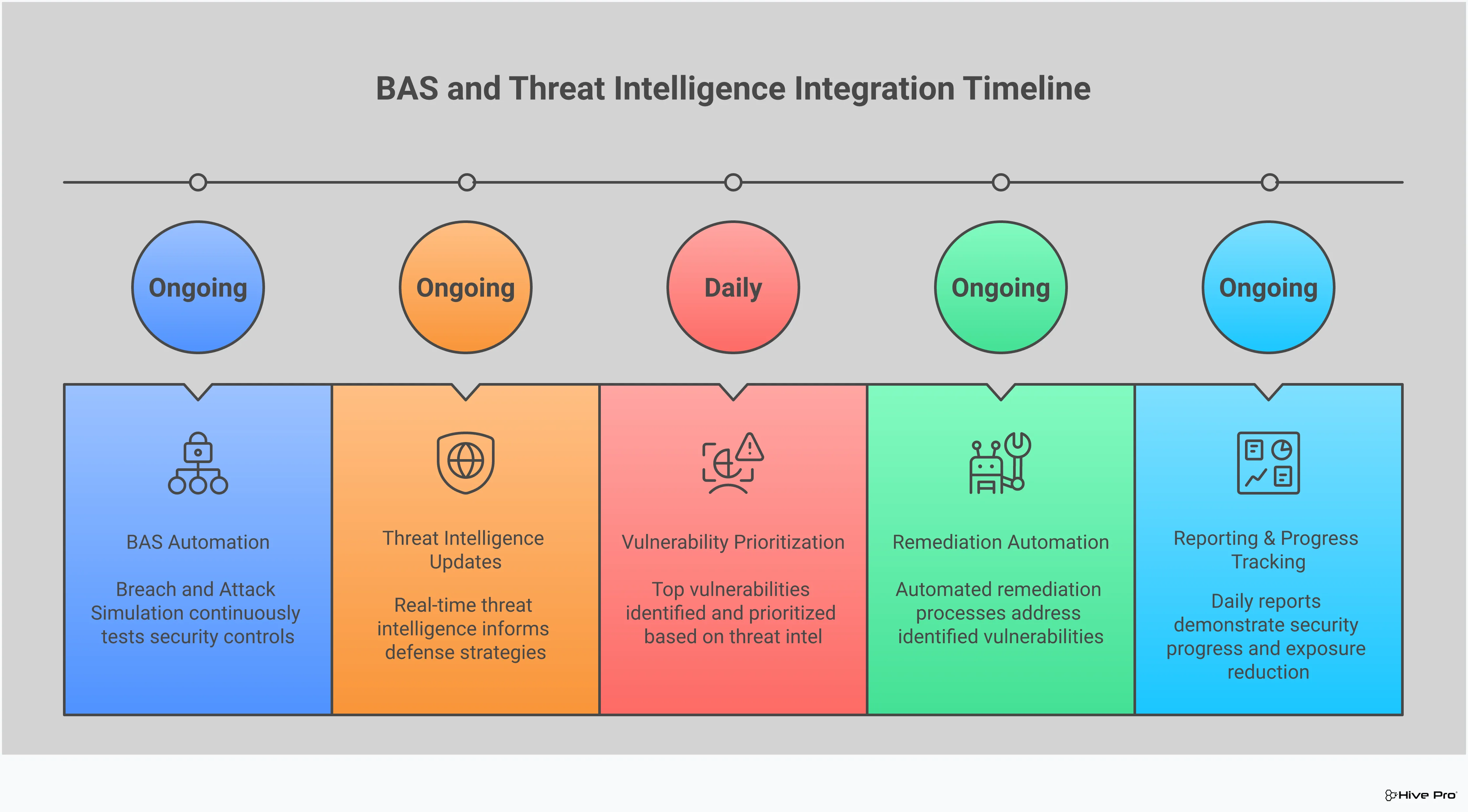
Why Threat Intelligence Is a Game-Changer for Exposure Management
If you’ve ever stared at a list of thousands of vulnerabilities, you know the feeling of being completely overwhelmed. The sheer volume makes it impossible to fix everything, so you’re forced to make tough calls about what to tackle first. This is where threat intelligence completely changes the game. Instead of relying solely on a technical severity score, you get real-world context about which vulnerabilities are actually being used in attacks. It’s the difference between knowing a window is unlocked and knowing a burglar is actively checking windows on your street.
An effective exposure management strategy is fueled by high-quality threat intelligence. It helps you cut through the noise and see your organization from an attacker’s perspective. By understanding which weaknesses are being targeted, why they’re being targeted, and how, you can move from a reactive state of patching everything to a proactive strategy of fixing what matters most. This shift is critical for focusing your team’s limited time and resources on the exposures that pose a genuine, immediate threat to your business. With strong in-house intelligence, you can stop guessing and start making confident, risk-based decisions.
Prioritize Vulnerabilities Based on Active Exploits
A high CVSS score can be misleading. While it tells you how severe a vulnerability could be, it doesn’t tell you if anyone is actually exploiting it. Threat intelligence bridges that gap by providing data on active exploits in the wild. This context is crucial for effective prioritization. It allows your team to distinguish between a theoretical risk and a clear and present danger. When you know a specific vulnerability is part of an active campaign, it immediately jumps to the top of the list. This intelligence-led approach ensures you prioritize threats that have the highest likelihood of impacting your organization, allowing you to address the most critical fires first.
Understand Attacker Behavior and Tactics
Knowing what to patch is only half the battle; knowing how attackers operate is just as important. Threat intelligence provides deep insights into the tactics, techniques, and procedures (TTPs) that adversaries use. When you know which attack paths are most common or what type of assets a certain threat group targets, you can build more resilient defenses. This knowledge helps you anticipate an attacker’s next move and strengthen controls beyond just patching a single vulnerability. By learning to understand their methods, you can better validate your security controls and ensure they stand up against real-world attack scenarios, not just theoretical ones.
Focus Your Resources on Imminent Threats
Ultimately, the greatest benefit of integrating threat intelligence is focus. Security teams are stretched thin, and burnout is a real problem. Chasing down every single low-risk vulnerability is an inefficient use of valuable time and expertise. Threat intelligence allows you to direct your resources toward the threats that pose an imminent risk to your business operations. By concentrating on actively exploited vulnerabilities and understanding attacker TTPs, you can significantly speed up remediation times and reduce your overall exposure. This focused approach, powered by a continuous threat exposure management platform, not only strengthens your security posture but also proves the value of your team’s efforts by preventing real-world attacks.
Choosing the Right Exposure Management Platform
Once you’re ready to move from a reactive security posture to a proactive one, the next step is finding a platform that fits your team’s needs. Exposure management tools are designed to give you a complete picture of your security landscape by identifying, assessing, and helping you fix vulnerabilities across your entire digital footprint. But not all platforms are created equal. The right one will feel less like another tool to manage and more like a central command center for your security operations, simplifying complexity and giving you clear, actionable direction.
A Look at the Hive Pro Uni5 Xposure Platform
The Hive Pro Uni5 Xposure Platform is built to provide this central command. It moves beyond simply listing vulnerabilities by giving you a unified view of all your cyber risks in one place. The platform continuously scans your entire attack surface, from on-prem servers to cloud assets, to find weaknesses. It then uses threat intelligence from our in-house HiveForce Labs to prioritize the exposures that pose a genuine threat to your business. This approach helps you focus your team’s efforts on what matters most, turning endless lists of vulnerabilities into a manageable, prioritized action plan for remediation.
How Other Market Solutions Stack Up
The broader market for exposure management is a significant step up from traditional vulnerability management. The best solutions don’t just find weaknesses; they connect those weaknesses to potential business impact and prioritize them accordingly. Instead of just flagging a CVE, a modern platform will tell you if that CVE is being actively exploited in the wild and how it could affect your critical assets. This context is what separates a simple scanner from a true exposure management solution. It’s about understanding the "so what?" behind every vulnerability and making informed decisions based on real-world risk.
What to Look for When Comparing Platforms
When you start comparing platforms, focus on a few key areas. First, check the coverage. Your chosen tool must be able to scan all your digital assets, including temporary cloud systems and third-party services, to provide a complete attack surface view. Second, look at its intelligence and automation capabilities. The platform should link vulnerabilities with threat data to help you accurately prioritize risks and should integrate smoothly with your existing IT and development workflows to automate fixes. Finally, consider usability. Look for clear dashboards and reports that make it easy for everyone, from your security analysts to the C-suite, to understand your security posture at a glance.
Your Platform Selection Checklist: 3 Key Questions
Choosing an exposure management platform is a big decision. With so many options on the market, it’s easy to get lost in feature lists and marketing promises. To find the right fit, you need to cut through the noise and ask the questions that really matter for your security program. Think of this as your go-to checklist for evaluating potential solutions.
A great platform won’t just add another dashboard to your collection; it will become the central hub for understanding and reducing your organization's risk. It should give you a clear, unified view of your entire environment, integrate smoothly with the tools you already rely on, and help you focus your team’s efforts on the threats that pose a genuine danger. Before you sign any contracts, make sure you get clear answers to these three fundamental questions. They’ll help you separate the contenders from the pretenders and select a platform that delivers real, measurable security outcomes.
Does It Cover Your Full Attack Surface?
Your attack surface is everything an attacker could potentially exploit. It includes your on-prem servers, cloud instances, employee laptops, web applications, and even forgotten IoT devices. If your exposure management platform can’t see all of it, you’re left with dangerous blind spots. A partial view gives you a false sense of security. You need a solution that provides continuous, comprehensive discovery across your entire digital ecosystem. When evaluating a platform, ask how it discovers and inventories assets across diverse environments. A truly effective tool will give you a complete and always-up-to-date view of your total attack surface, ensuring no potential entry point goes unmonitored.
Can It Integrate with Your Existing Tools?
Your team already uses a suite of security tools, from SIEMs and EDR platforms to cloud security solutions and application scanners. A new exposure management platform shouldn't force you to start from scratch. Instead, it should act as a force multiplier, integrating with your existing infrastructure to pull in data and provide a single, unified view of your security posture. This integration is key to breaking down data silos and creating streamlined workflows. Ask potential vendors about their out-of-the-box integrations and API capabilities. The right platform will enhance your current security stack, not complicate it, allowing you to unify all your exposure data in one place.
Is the Risk Prioritization Accurate and Scalable?
Not all vulnerabilities are created equal. A platform that just spits out a long list of CVEs based on CVSS scores isn’t helping you—it’s just adding to the noise. Effective exposure management is about prioritization. You need a platform that can accurately identify which exposures pose the greatest risk to your specific organization. This requires contextual analysis that considers factors like the business impact of an asset, the likelihood of exploitation, and whether there are active threats in the wild. Look for a solution that offers advanced vulnerability and threat prioritization so your team can focus on fixing what matters most, first. As your organization grows, this capability must scale with you.
How to Measure the Effectiveness of Your Platform
Okay, you’ve implemented an exposure management platform. Now for the big question: Is it actually working? Proving the value of any security tool isn't just about feeling more secure; it's about demonstrating real, measurable improvements to your security posture. You need to move beyond anecdotes and into analytics. The right platform won't just help you find and fix issues—it will give you the data to prove you're getting faster, smarter, and more efficient at it. By tracking a few key performance indicators (KPIs), you can clearly see the impact of your investment and show stakeholders that you're not just managing vulnerabilities, but actively reducing risk.
This isn't about generating more reports for the sake of it; it's about tracking the numbers that truly matter. Think of it like a fitness tracker for your security program. You wouldn't just go to the gym without tracking your progress, and the same logic applies here. Are you closing security gaps faster than before? Is your team spending less time on manual triage and more time on strategic initiatives? Are you consistently meeting compliance requirements without last-minute scrambles? These are the questions that metrics can answer. Let's look at the specific numbers that will tell you if your platform is delivering on its promise to transform your security program from a reactive function to a proactive, data-driven operation.
Track Your Mean Time to Detect and Respond
In security, speed is your greatest advantage. That’s why Mean Time to Detect (MTTD) and Mean Time to Respond (MTTR) are such a crucial metric in cybersecurity. MTTD measures how long it takes your team to discover a potential threat, while MTTR tracks how quickly you can neutralize it. A strong exposure management platform should drastically reduce both of these times. By providing continuous visibility across your attack surface and prioritizing threats based on real-world risk, it helps you spot trouble almost instantly. This allows your team to stop guessing what to fix first and start acting on the most critical issues immediately. A falling MTTD and MTTR is one of the clearest indicators that your platform is successfully shrinking the window of opportunity for attackers.
Monitor Vulnerability Remediation Time and Compliance
Finding vulnerabilities is only half the battle; fixing them is what truly reduces risk. That's why tracking your vulnerability remediation time is essential. This metric is a key performance indicator (KPI) that shows how long it takes your team to patch a vulnerability after it’s been discovered. Your exposure management platform should provide clear, actionable guidance that helps your team fix issues faster, bringing this number down over time. At the same time, the platform should strengthen your compliance posture. By continuously identifying and flagging misconfigurations or vulnerabilities that violate standards like PCI DSS or HIPAA, it makes audits smoother and helps you avoid costly penalties. Focusing on these critical metrics gives you a clear view of your program's performance and your overall risk landscape.
Debunking Common Exposure Management Myths
Let's clear the air on a few common misconceptions about exposure management. Adopting a new security approach can feel like a big step, but it’s often more straightforward—and necessary—than you might think.
Myth #1: "It's too complex for our team to implement."
It's easy to assume that adding a new platform will just create more work, especially when your security, IT, and DevOps teams operate in their own worlds. But the idea that exposure management is too complex to implement gets it backward. Modern platforms are designed specifically to bridge those gaps. Instead of adding another silo, a solution like the Uni5 Xposure Platform integrates with your existing tools to create a unified view of risk. It streamlines communication and workflows, ensuring everyone is working from the same playbook. The goal isn't to add complexity; it's to bring clarity to it.
Myth #2: "We're not big enough to need one."
This is a big one. Many smaller teams believe they can fly under the radar, thinking that advanced security is only for enterprise-level companies. The truth is, attackers don't care about your org chart. They care about finding an easy way in, and organizations of all sizes have valuable data to protect. This kind of thinking can lead to significant vulnerabilities, as attackers often target smaller businesses precisely because they expect weaker defenses. An exposure management platform actually helps smaller teams do more with less by focusing their limited resources on the threats that pose a genuine, immediate risk. It’s about making your security efforts more efficient, not just more expensive.
Related Articles
- How BAS Improves Threat Exposure Management
- The Ultimate Guide to Threat Exposure Management
- Exposure Management: A Proactive Security Guide
- Top Benefits of Vulnerability Prioritization
- What Is an Attack Surface Mapper? A Complete Guide
Frequently Asked Questions
How is an exposure management platform different from my traditional vulnerability scanner? Think of it this way: a traditional scanner gives you a long list of all the unlocked windows and doors in your building. An exposure management platform shows you which of those unlocked doors lead directly to your most valuable assets and tells you which ones burglars are actively trying to open on your street. It adds critical context—like business impact and active threat intelligence—so you can focus on fixing the handful of issues that pose a real, immediate danger, rather than getting lost in a sea of low-risk alerts.
My team is already overwhelmed with alerts. Won't this just add more noise? Actually, it’s designed to do the exact opposite. The core purpose of an exposure management platform is to cut through the noise, not add to it. Instead of just flagging every potential weakness, it uses threat intelligence and an understanding of your specific environment to prioritize what truly needs your attention. It helps you focus on the critical few exposures that are most likely to be exploited, so your team can stop chasing down low-impact alerts and concentrate its efforts where they will make a real difference.
What's the real benefit of adding Breach and Attack Simulation (BAS)? Breach and Attack Simulation acts as a reality check for your security controls. You might have a firewall and endpoint protection in place, but are they configured correctly and actually working against modern attack techniques? BAS runs safe, simulated attacks against your systems to find out. It helps you validate that your defenses are performing as expected and identifies gaps before a real attacker can exploit them. It’s how you move from assuming you’re protected to knowing you are.
How does this platform actually speed up the process of fixing vulnerabilities? The bottleneck in security is often the handoff between finding a problem and getting it fixed. An exposure management platform helps bridge that gap. By providing clear, prioritized remediation guidance and integrating directly with IT ticketing and patch management systems, it streamlines the entire workflow. Security teams can automatically create tickets with all the necessary context, and IT teams get a clear, manageable list of what to fix first. This removes the friction and manual back-and-forth that slows everything down.
We're a smaller organization. Is a platform like this overkill for us? Not at all. In fact, it can be even more valuable for smaller teams that are stretched thin. Attackers don't discriminate based on company size; they look for easy targets. An exposure management platform helps you make the most of your limited resources by ensuring every action you take is focused on reducing the most significant risk. It helps you work smarter, not harder, by automating discovery and prioritizing the threats that could cause the most damage to your business.







.svg)