How Threat Exposure Management Works: A Full Guide


Attackers don't care about your long list of CVEs or your internal compliance reports. They care about one thing: finding an exploitable path into your network. To effectively defend your organization, you need to adopt that same mindset. Threat Exposure Management (TEM) is the framework that allows you to do just that. It moves beyond simple vulnerability scanning to give you a comprehensive, attacker-centric view of your entire digital footprint. By understanding your exposures from the outside in, you can prioritize the weaknesses that create viable attack paths. This guide will walk you through how threat exposure management works, helping you anticipate attackers' moves and fix your most critical risks first.
Key Takeaways
- Focus on Exposure, Not Just Vulnerabilities: Move beyond an endless cycle of patching. A proactive security program requires a complete, continuous view of your attack surface to understand which gaps create genuine business risk.
- Use Threat Intelligence to Prioritize Smarter: A high CVSS score doesn't automatically equal an immediate threat. Layering real-world threat intelligence helps you pinpoint which weaknesses are actively being exploited, so you can focus your team's efforts on the most imminent dangers.
- Validate Your Defenses with Attack Simulation: Don't just assume your security controls work as intended. Use Breach and Attack Simulation (BAS) to safely test your environment against real-world attack paths, confirming that your remediation efforts have truly closed critical security gaps.
What Is Threat Exposure Management?
Threat Exposure Management (TEM) is a strategic approach for organizations to continuously find, prioritize, and address cyber risks across their entire digital footprint. Think of it as moving from a defensive crouch to a proactive stance. Instead of just reacting to alerts and patching known vulnerabilities, TEM gives you a comprehensive view of your security gaps and helps you understand which ones attackers are most likely to exploit. It’s about seeing your organization through an attacker's eyes to fix the most critical issues before they can cause real damage.
Moving Beyond Reactive Security
Traditional security often feels like a frantic game of whack-a-mole. You get a long list of vulnerabilities and try to patch them all, without a clear sense of which ones pose an immediate threat. TEM changes the game by helping you find and fix your biggest cyber threats before they become problems. Unlike older methods that just catalog weaknesses, TEM looks at the bigger picture. It helps you figure out which vulnerabilities are most likely to be targeted in your specific environment, making your organization a much harder target for attackers and reducing the chance of a successful breach.
The Core Principles of TEM
A strong TEM program is built on a few core principles that work together in a continuous cycle. It all starts with comprehensive attack surface discovery to see every asset you own. From there, it involves ongoing vulnerability assessments and threat modeling to understand potential attack paths. The real power comes from integrating threat intelligence and using risk-based prioritization to focus your team’s efforts. These key parts of TEM ensure you’re not just busy, but effective. A unified threat exposure management platform brings these principles together, providing a single source of truth for your security posture.
What Are the Key Components of a TEM Program?
A successful Threat Exposure Management (TEM) program isn’t a single tool or a one-off project; it’s a continuous cycle built on several interconnected components. Think of it as a strategic framework that brings different security functions together to work in harmony. Instead of operating in silos, where one team scans for vulnerabilities and another tries to figure out which ones matter, TEM integrates these efforts into a unified workflow. This approach ensures that you’re not just finding weaknesses, but also understanding their real-world risk and taking decisive action.
The goal is to create a clear, comprehensive picture of your security posture at all times. Each component plays a specific role, from discovering what assets you own to validating whether your defenses can withstand an actual attack. By bringing these pieces together, you can move from a state of constant reaction to one of proactive defense. A modern Threat Exposure Management Platform integrates these functions to provide a single source of truth, helping you focus your team’s valuable time and resources on the threats that pose a genuine danger to your organization.
Continuous Attack Surface Monitoring
You can't protect what you don't know you have. That’s the simple truth at the heart of continuous attack surface monitoring. This foundational component involves constantly scanning your entire digital environment—from on-premise servers and cloud instances to web applications and IoT devices—to maintain a complete and up-to-date inventory of all your assets. Your attack surface is dynamic; new devices come online, and configurations change without warning. Continuous monitoring ensures you have a real-time view of your entire digital footprint, so nothing slips through the cracks. This isn't a quarterly scan; it's an ongoing process that identifies new and unknown assets as they appear, giving you the visibility needed to manage your exposure effectively.
Vulnerability Assessment and Discovery
Once you know what assets are part of your attack surface, the next step is to find the weaknesses within them. Vulnerability assessment goes beyond simply running a scanner and getting a list of CVEs. It’s about discovering potential security gaps across your infrastructure, applications, and configurations. This process looks at how a weakness could actually be used by an attacker, which systems it affects, and what critical data or functions are at risk. A thorough assessment gives you a detailed catalog of your vulnerabilities, providing the raw data needed to understand where your organization is most exposed and laying the groundwork for effective prioritization.
Risk Prioritization and Scoring
A long list of vulnerabilities can be overwhelming. With thousands of potential issues, how do you decide what to fix first? This is where risk-based prioritization comes in. This critical component helps you cut through the noise by scoring exposures based on their actual risk to your business. It combines multiple factors, including the severity of the vulnerability (like its CVSS score), the importance of the affected asset, and whether attackers are actively exploiting the weakness in the wild. By applying this contextual logic, you can prioritize vulnerabilities that pose an immediate and credible threat, ensuring your remediation efforts are focused where they’ll have the greatest impact.
Threat Intelligence Integration
Threat intelligence is the element that connects your internal vulnerability data to the external threat landscape. It provides crucial context about what attackers are doing right now, which vulnerabilities they’re targeting, and what techniques they’re using. Integrating real-time threat intelligence from a dedicated research team like HiveForce Labs allows you to see your exposures through the eyes of an adversary. This helps you understand which of your vulnerabilities are not just theoretical risks but are part of an active attack campaign. This insight is essential for making informed, risk-based decisions and staying one step ahead of potential threats.
How Does the Threat Exposure Management Process Work?
Threat Exposure Management isn't a one-time fix; it's a continuous lifecycle designed to keep your organization ahead of attackers. Think of it as a strategic loop rather than a linear checklist. By breaking it down into five core steps, you can build a repeatable, proactive process that systematically reduces your attack surface and hardens your defenses against real-world threats. Each step feeds into the next, creating a powerful cycle of discovery, prioritization, and improvement that transforms your security posture from reactive to resilient. This structured approach helps you move beyond simply chasing alerts and start making strategic decisions based on a clear understanding of your unique risk landscape.
Step 1: Scope Your Environment and Discover Assets
You can't protect what you don't know you have. The first step is to define the boundaries of your TEM program. Decide which parts of your digital footprint you'll cover—this includes everything from your on-premise servers and cloud infrastructure to your remote workforce and third-party partner connections. Once your scope is set, the real work of discovery begins. You need to conduct a thorough inventory to find every digital asset within that scope. This process of Total Attack Surface Management is foundational, as it uncovers not just known devices but also shadow IT, misconfigurations, and other hidden risks tied to your assets.
Step 2: Identify and Assess Vulnerabilities
With a complete asset inventory in hand, the next step is to find the weaknesses. This involves using a combination of tools and techniques, such as vulnerability scanners, penetration testing, and secure code reviews, to identify every potential flaw. But a simple list of CVEs isn't enough. True assessment goes deeper, analyzing how a specific weakness could actually be exploited in your environment. You need to understand which critical systems are affected and what sensitive data or business functions are at risk. This contextual analysis is what separates a simple vulnerability scan from a meaningful vulnerability and threat prioritization process.
Step 3: Prioritize and Validate Risks
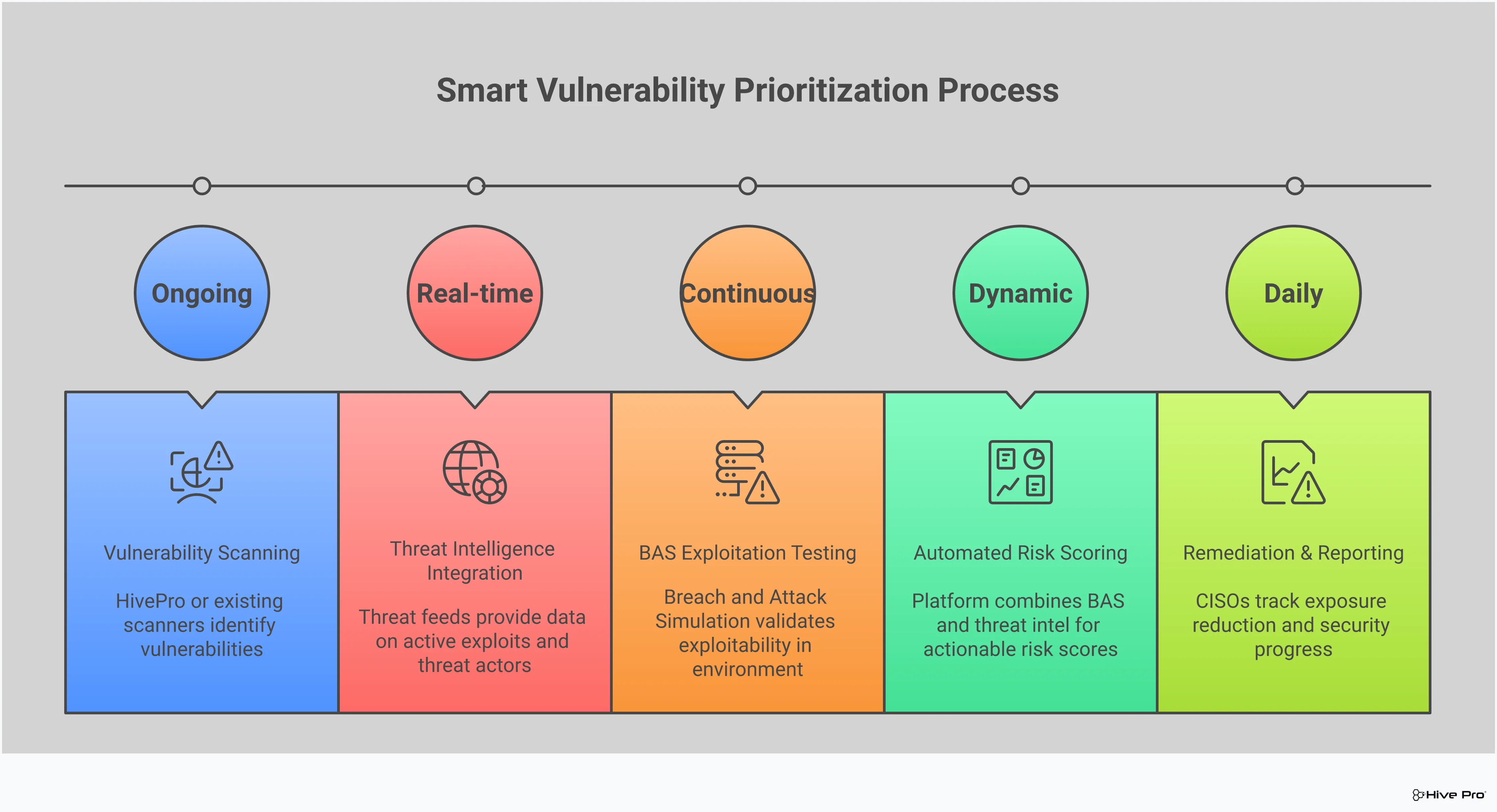
Not all vulnerabilities are created equal. A critical vulnerability on a non-essential, isolated server is far less concerning than a medium-risk one on your primary payment gateway. This step is all about focusing your efforts where they matter most. You'll need to rank your identified security issues based on their potential business impact, the likelihood of exploitation, and active threat intelligence. More importantly, you must validate these potential attack paths. Adversarial Exposure Validation techniques like Breach and Attack Simulation (BAS) can confirm if a vulnerability is truly exploitable in your environment, helping you cut through the noise and concentrate on fixing the problems that pose a genuine threat.
Step 4: Plan and Mobilize Remediation
Once you know what to fix, it's time to take action. Remediation is a team effort that requires clear communication and collaboration with IT, DevOps, and other business units. The goal is to create a concrete plan to address the prioritized vulnerabilities. This could involve deploying patches, reconfiguring systems, updating security policies, or even decommissioning legacy applications. After a fix is implemented, it's crucial to circle back and verify that the solution worked as intended and didn't introduce any new problems. This verification step ensures that your remediation efforts are actually reducing risk and not just checking a box.
Step 5: Monitor and Improve Continuously
Your digital environment is constantly changing, and so is the threat landscape. The final step is to make your TEM program a living, breathing part of your security operations. This means continuously monitoring your systems to detect new assets and vulnerabilities as soon as they appear. It also involves learning from every remediation cycle and security incident to refine your processes over time. By treating TEM as an ongoing program rather than a series of projects, you can steadily improve your security posture. A comprehensive Threat Exposure Management platform can automate much of this cycle, providing the continuous visibility and intelligence needed to adapt and mature.
What Tools Power Threat Exposure Management?
A strong Threat Exposure Management (TEM) program isn’t about a single, magical tool. Instead, it’s a strategic approach powered by a suite of integrated technologies that work together to give you a complete and continuous view of your risk. Think of it as a diagnostic toolkit for your organization's security health. Each tool plays a specific role, from discovering potential weaknesses and understanding their business context to validating your defenses against real-world attacks. This ecosystem of tools is what makes a TEM program so effective.
When these tools are combined into a unified platform, they transform how you manage security. You move from chasing down endless vulnerability alerts to making informed, risk-based decisions. The goal is to connect the dots between a potential weakness, the threat actors trying to exploit it, and the actual business impact. This integrated view is what allows you to focus your team’s valuable time and resources on the exposures that truly matter. A comprehensive Threat Exposure Management Platform brings these capabilities together to provide a single source of truth for your security posture, helping you see your entire attack surface and prioritize with confidence. It’s about creating a cohesive workflow from discovery to remediation.
Vulnerability Scanners and Assessment Platforms
Vulnerability scanners are the foundation of any exposure management program. These are the tools that continuously scan your assets—from servers and laptops to cloud instances and applications—to identify known vulnerabilities and misconfigurations. But discovery is just the first step. A modern approach requires a deeper level of assessment. It’s not enough to just find weaknesses; you need to understand how they could be used, which critical systems they affect, and what important data is at risk. This context is what separates a simple scan from a true attack surface management program, giving you a clear picture of where your most significant risks lie.
Threat Intelligence Feeds and Services
Once you’ve identified vulnerabilities, the next question is, "Which ones should I fix first?" With thousands of potential issues, you can't fix everything at once. This is where threat intelligence comes in. By gathering and analyzing information about current and emerging threats, these services provide crucial context. You can see which vulnerabilities are being actively exploited by attackers in the wild, what techniques they are using, and which industries they are targeting. This real-world data, often curated by expert teams like HiveForce Labs, helps you cut through the noise and focus on the threats that pose an immediate danger to your organization.
Risk Assessment and Prioritization Engines
A risk assessment and prioritization engine acts as the central brain of your TEM program. It takes the raw data from your vulnerability scanners and enriches it with context from threat intelligence feeds and business asset information. This allows for a sophisticated, risk-based prioritization that goes far beyond standard CVSS scores. The engine considers multiple factors: the severity of the weakness, the importance of the affected system, whether attackers are actively exploiting the vulnerability, and even the complexity of remediation. This intelligent vulnerability and threat prioritization produces a clear, actionable list of what to fix first to achieve the greatest risk reduction.
Breach and Attack Simulation (BAS) Tools
How do you know if your security controls will actually stop an attack? Breach and Attack Simulation (BAS) tools help you answer that question. These platforms safely and continuously simulate real-world attack techniques against your security infrastructure to see what gets through. By running these automated tests, you can validate whether your firewalls, endpoint protection, and other controls are configured correctly and working as expected. Integrating BAS into your TEM program provides the ultimate validation, confirming whether a prioritized vulnerability is truly exploitable in your environment. This adversarial exposure validation closes the loop, ensuring your remediation efforts are effective and your defenses are solid.
How Does Breach and Attack Simulation (BAS) Improve Vulnerability Management?
Think of your vulnerability management program as a list of potential problems. You know the vulnerabilities exist, but you don't always know which ones an attacker could actually use to break in. This is where Breach and Attack Simulation (BAS) comes in. Instead of just listing theoretical weaknesses, BAS tools act like a virtual red team, constantly and safely simulating real-world attacks against your environment.
This approach shifts your strategy from guessing to knowing. By running automated attack simulations, you can see exactly how your security controls—like firewalls, EDR, and email gateways—hold up against the latest threats. It’s a continuous, automated way to pressure-test your defenses and find the exploitable paths an attacker would take. This provides concrete evidence of what needs fixing, helping you move beyond vulnerability scanning and toward true adversarial exposure validation. It’s about understanding not just what is vulnerable, but how you could be breached.
Validate Your Security Controls
You’ve invested a lot in your security stack, but how do you know it’s all working together as intended? A misconfiguration or a gap in coverage can leave a door wide open for attackers. BAS allows you to continuously validate your security controls by simulating real-world attacks. This process helps you find gaps in your security posture and confirm that your existing tools are actually effective against current threats. Instead of waiting for an annual penetration test, you get a constant, real-time assessment of your defenses, allowing you to spot and fix issues before they can be exploited.
Test Against Real-World Attack Scenarios
Vulnerability scanners tell you about isolated weaknesses, but attackers don't operate in a vacuum—they use a series of steps to achieve their goals. BAS provides a platform to test your defenses against these multi-stage, real-world attack scenarios. This helps you understand how your systems would respond to an actual threat, from initial access to data exfiltration. These simulations are often informed by the latest threat intelligence, mimicking the exact tactics, techniques, and procedures (TTPs) used by active threat groups. It’s a safe way to see an attack play out and identify where your defenses bend or break.
Prioritize Remediation Based on Exploitability
One of the biggest challenges in vulnerability management is the sheer volume of alerts. With thousands of vulnerabilities to deal with, it’s impossible to fix everything. By using BAS, you can prioritize remediation efforts based on the exploitability of those vulnerabilities. This means you can focus on fixing the issues that pose a clear and present danger—the ones that are part of a viable attack path. A vulnerability with a high CVSS score might be unexploitable in your environment, while a lower-scored one could be the key to a major breach. BAS provides the context you need for true vulnerability and threat prioritization, helping you direct your resources to the fixes that matter most.
Why Is Threat Intelligence a Must-Have for Exposure Management?
A long list of vulnerabilities from a scanner is more noise than signal. Without context, you’re left guessing which of the hundreds or thousands of findings actually pose a threat to your organization. This is where threat intelligence comes in. It provides the critical context needed to understand your risk by answering the most important question: "Of all the ways we could be attacked, how are threat actors actually attacking organizations like ours right now?" Integrating this intelligence is what separates a reactive vulnerability management program from a proactive threat exposure management strategy.
Understand the Active Threat Landscape
To effectively defend your assets, you need to know what you’re up against. The threat landscape is dynamic, with new attack techniques and malware variants emerging constantly. Threat intelligence gives your security team a real-time view of this landscape, showing you which weaknesses attackers are actively targeting across the globe. By understanding current attacker behaviors and trends, you can anticipate their next moves and prepare your defenses accordingly. This insight, often detailed in threat advisories, allows you to shift from a reactive posture to a proactive one, strengthening your security controls before they are ever tested by a real attack.
Pinpoint Vulnerabilities Exploited in the Wild
Not all vulnerabilities are created equal. A high CVSS score doesn't automatically mean a vulnerability is your biggest problem. The real indicator of risk is whether a flaw is being actively exploited by attackers. Threat intelligence cuts through the noise by gathering information on current and potential attacks, helping you identify which specific vulnerabilities are being used "in the wild." This allows you to create a much more focused and effective security strategy. Instead of trying to patch everything, you can concentrate on the flaws that pose an immediate danger, a core principle of effective vulnerability and threat prioritization.
Focus Your Resources on Imminent Risks
Your team’s time and resources are finite. A "patch everything" approach is not only impractical but also leads to burnout and inefficient risk reduction. By combining threat intelligence with data about your own environment, you can adopt a risk-based approach to remediation. This means focusing your efforts on the vulnerabilities that are both exploitable and exist on your critical assets. This ensures your team is always working on the most pressing threats first. A modern threat exposure management platform automates this process, using intelligence to guide your team toward the fixes that will have the greatest impact on reducing your overall exposure.
Common Challenges in Implementing TEM (And How to Overcome Them)
Adopting a Threat Exposure Management program is a significant step forward for any security team, but it’s not always a simple plug-and-play process. Like any major strategic shift, it comes with its own set of hurdles. The good news is that these challenges are well-understood, and with the right approach and tools, you can clear them effectively. Let's walk through some of the most common obstacles and discuss practical ways to get past them.
Gaining Visibility Across Diverse Environments
One of the biggest initial challenges is simply seeing everything you need to protect. Modern IT environments are sprawling and complex, extending far beyond the traditional on-premise network. You have assets in multiple clouds, remote employee devices, IoT hardware, and operational technology. This decentralization creates significant blind spots, making it nearly impossible to manage exposure if you can't see your full attack surface. It's hard to protect what you don't know you have.
The solution lies in adopting a platform that provides a unified, continuous view of your entire digital footprint. Instead of relying on disparate tools for different environments, you need a single source of truth. A robust Total Attack Surface Management solution continuously discovers and inventories all assets—whether they're in the cloud, on-premise, or part of your external-facing infrastructure—giving you the comprehensive visibility needed to start managing exposure effectively.
Overcoming Resource Constraints and Skill Gaps
Let's be honest: most security teams are stretched thin. Budgets are tight, and finding enough skilled cybersecurity professionals to manage an ever-growing list of tasks is a constant struggle. Manually sifting through thousands of vulnerabilities, correlating threat data, and managing remediation workflows is an unsustainable model for teams that are already at capacity. This can lead to burnout and critical risks being overlooked simply because there aren't enough hours in the day.
This is where automation and intelligent prioritization become your best friends. A modern TEM platform automates the tedious, time-consuming tasks of discovery and assessment. More importantly, it uses real-world threat intelligence to help you focus on what matters most. By implementing a system for Vulnerability & Threat Prioritization, you can shift your team's limited resources away from low-risk issues and concentrate their efforts on the critical exposures that pose a genuine threat to your business.
Solving Technology Integration Complexities
Many organizations have a security stack built over time, with various tools from different vendors that don't always communicate well. You might have one tool for vulnerability scanning, another for asset management, and a separate system for ticketing and remediation. This "Franken-stack" creates data silos and clunky, manual workflows, forcing your team to spend valuable time piecing together information instead of actively reducing risk.
A truly effective TEM program requires a platform that serves as a central hub for your security ecosystem. Look for a solution built with integration in mind, offering robust APIs and pre-built connectors for the tools you already use. The goal is to create a seamless flow of data. A unified platform like the Uni5 Xposure Platform can ingest data from your existing scanners and systems, correlate it with threat intelligence, and streamline remediation workflows, breaking down silos and creating a more efficient security operation.
Cutting Through Alert Fatigue
If your security team feels like they're drowning in alerts, they're not alone. Traditional vulnerability scanners and security tools can generate a massive volume of findings, and not all of them represent a real, immediate danger. This constant flood of information leads to alert fatigue, where analysts become desensitized to notifications, making it easy to miss the truly critical threats hidden in the noise.
The key is to move from a volume-based approach to a risk-based one. Instead of just looking at a CVE score, you need context. Is this vulnerability being actively exploited in the wild? Does an attacker have a known path to this asset? An effective TEM program leverages dedicated threat intelligence research, like the work done by HiveForce Labs, to enrich vulnerability data. This context allows you to filter out the noise and pinpoint the handful of exposures that require immediate attention, allowing your team to focus their energy where it will have the greatest impact.
Best Practices for a Successful TEM Program
Putting a successful Threat Exposure Management (TEM) program in place is about more than just buying new software. It’s a strategic shift that requires the right processes and a collaborative culture. When you move from a reactive cycle of patching vulnerabilities to proactively managing your exposure, you need a solid foundation. These practices aren’t just items on a checklist; they are the pillars that support a mature, effective security posture. By focusing on continuous visibility, teamwork, smart prioritization, and real-world threat data, you can transform your security efforts from a constant fire drill into a well-oiled machine that protects what matters most. Adopting these best practices will help your team work smarter, reduce risk more effectively, and demonstrate clear value to the entire organization. This approach helps you answer critical questions like, "What are our most critical assets?" and "Which threats pose the most immediate danger?" instead of just chasing an endless list of CVEs. It's about building a sustainable program that matures with your organization and adapts to the ever-changing threat landscape.
Implement Continuous Discovery and Automated Monitoring
Your attack surface is not static—it changes every time a new device connects to the network, a developer spins up a cloud instance, or a new application is deployed. That’s why a successful TEM program must “always be looking for new assets and potential entry points.” Manual spreadsheets and quarterly scans can’t keep up. You need automated tools that provide a continuous, up-to-date inventory of your entire digital footprint. This gives you a complete picture of your total attack surface, ensuring that no shadow IT or forgotten server becomes an attacker’s easy way in. Continuous monitoring is the only way to know what you need to protect at all times.
Build Cross-Functional Collaboration
Threat exposure isn’t just a security problem; it’s a business problem. The teams that manage the assets—like IT and DevOps—are the ones who ultimately perform the remediation. A TEM program breaks down the silos between these groups. By “sharing information about cyber risks with everyone in the company, not just the security team,” you create a shared sense of ownership and build a stronger security culture. When security provides clear, prioritized guidance and IT understands the context behind the requests, remediation happens faster and with less friction. This collaborative approach turns security from a roadblock into a business partner.
Use a Risk-Based Prioritization Framework
If you’re trying to fix every single vulnerability, you’re going to burn out your team without making a real impact on your risk level. A risk-based approach helps you focus on what truly matters. This framework moves beyond basic CVSS scores to consider multiple factors, including “how serious the weakness is, how important the affected system is, if attackers are already using this weakness, and how much effort it will take to fix.” This intelligent vulnerability and threat prioritization ensures your team spends its limited time and resources on the exposures that pose the greatest and most immediate threat to your organization.
Utilize Contextual Threat Intelligence
How do you know which vulnerabilities are being actively exploited by attackers? That’s where threat intelligence comes in. It provides the real-world context you need to make informed decisions. A strong TEM program will “use information about what hackers are doing right now to help decide which exposures are most important to fix.” This intelligence, often curated by expert teams like HiveForce Labs, tells you which CVEs are part of active campaigns or have readily available exploits. By layering this data onto your vulnerability scans, you can quickly pinpoint the threats that require immediate attention, separating the theoretical risks from the clear and present dangers.
How to Measure the Success of Your TEM Program
You’ve put in the work to build a Threat Exposure Management program, but how do you know it’s actually making a difference? Proving the value of your security efforts is key, not just for your team's morale, but for communicating success to leadership and justifying your budget. Instead of relying on gut feelings, you can use clear, quantifiable metrics to track your progress and demonstrate real improvement in your security posture. These key performance indicators (KPIs) show exactly how your TEM program is reducing risk over time. By focusing on the right numbers, you can move from saying "I think we're more secure" to showing "We've reduced our critical exposure by 40% this quarter." This shift is crucial for gaining buy-in and resources. It transforms security from a cost center into a strategic business enabler. When you can clearly articulate your program's impact with data, you build trust and demonstrate accountability. It’s about telling a compelling story backed by hard evidence. The right metrics not only validate your strategy but also highlight areas for improvement, helping you fine-tune your approach for even better results. Let's look at four essential metrics you should be tracking.
Track Your Mean Time to Discovery (MTTD)
You can't fix a problem you don't know you have. That's why Mean Time to Discovery (MTTD) is such a critical metric. It measures the average time it takes for your team to identify a new vulnerability or threat in your environment. A lower MTTD is a clear sign that your discovery and monitoring capabilities are getting sharper. As your TEM program matures, you should see this number consistently decrease, proving you’re getting faster at spotting potential issues before they can be exploited. This is a direct reflection of how well your Threat Exposure Management lifecycle is functioning.
Monitor Your Mean Time to Remediation (MTTR)
Once you’ve discovered a vulnerability, the clock starts ticking. Mean Time to Remediation (MTTR) measures the average time it takes your team to fix a security issue after it’s been identified. This KPI is all about efficiency and action. A shrinking MTTR shows that your remediation workflows are improving and your team is getting better at closing security gaps quickly. This reduces the window of opportunity for attackers and is a powerful indicator of a well-oiled incident response process. Tracking both MTTD and MTTR gives you a comprehensive view of your team's detection and response capabilities.
Analyze Risk Score Improvements
Watching your organization's overall risk score go down is one of the most direct ways to see your TEM program succeed. This metric consolidates countless data points into a single, understandable score that represents your security posture. As you identify and remediate vulnerabilities, your risk score should steadily decline. This provides tangible proof that your efforts are effectively reducing the organization's exposure to threats. It’s also an incredibly effective way to communicate the value of your work to executives and board members, as it translates complex security activities into a simple measure of progress and vulnerability prioritization.
Calculate Your Exposure Reduction Percentage
Ultimately, the goal of TEM is to shrink your attack surface. Calculating your exposure reduction percentage tells you exactly how well you're doing that. This metric tracks the decrease in the number of exposed systems, open ports, or other potential entry points over time. For example, if you reduce the number of internet-facing assets with critical vulnerabilities from 50 to 10, you’ve achieved an 80% reduction. This is a powerful, bottom-line metric that demonstrates a direct decrease in potential avenues for attack, showing how effectively you are managing your total attack surface.
Related Articles
- Exposure Validation Revolution: Proving Your Defenses Against Real Attacks
- What Is Risk-Based Vulnerability Management?
- Threat Exposure Management: An Overview - Hive Pro Blog
- 5 Best Practices for Exposure Management Teams
- From Searching in the Dark to Seeing Ahead With Hive Pro’s Enhanced BAS
Frequently Asked Questions
How is Threat Exposure Management different from traditional vulnerability management? Think of traditional vulnerability management as creating a long to-do list of every potential problem, like every cracked window in a skyscraper. Threat Exposure Management, on the other hand, is like having a security expert who points out that the cracked window on the ground floor right next to the vault is the one you need to fix immediately. It shifts the focus from simply cataloging weaknesses to understanding which ones an attacker is most likely to find and use against you, based on your specific environment and the current threat landscape.
My team is already swamped with alerts. Won't this just add more work? It’s actually the opposite. The goal of a Threat Exposure Management program is to reduce noise and combat that feeling of being overwhelmed. Instead of giving you another endless list of low-level alerts, it acts as a powerful filter. By combining vulnerability data with real-world threat intelligence and an understanding of your critical assets, it helps you pinpoint the handful of issues that pose a genuine, immediate risk. This allows your team to stop chasing every minor alert and focus their valuable time on fixing the problems that truly matter.
What's the real difference between a vulnerability and an exposure? A vulnerability is a specific weakness, like a software flaw or a misconfiguration. An exposure is a vulnerability that an attacker can actually reach and exploit to cause harm. For example, a server having an unpatched vulnerability is a weakness. But if that server is internal, air-gapped, and has no connection to critical data, it's not a significant exposure. An exposure is that same vulnerability on a public-facing web server that processes customer payments. TEM is all about finding and fixing the exposures, not just listing the vulnerabilities.
Do I need to replace all my existing security tools to adopt TEM? Not at all. A strong Threat Exposure Management platform is designed to work with the tools you already have. It acts as a central hub that integrates with your existing vulnerability scanners, asset management systems, and other security solutions. The platform ingests the data from these tools and enriches it with threat intelligence and business context to give you a single, unified view of your risk. It enhances your current security stack by breaking down data silos and making your existing tools more effective.
How does Breach and Attack Simulation (BAS) help prioritize what to fix first? Breach and Attack Simulation provides proof. While a vulnerability scan tells you a door is unlocked, a BAS tool actually tries to open it and see where it leads. By safely simulating real-world attack paths, it validates whether a vulnerability is truly exploitable in your specific environment. This moves a potential risk from a theoretical "what if" scenario to a confirmed threat. When a simulation shows a clear path from a specific vulnerability to a critical asset, that vulnerability immediately becomes a top priority for your team to fix.