How to Use Threat Intel for Effective TEM


Think of your security program as defending a fortress. A traditional vulnerability scan gives you a list of potential weak spots in your walls, but it doesn't tell you where the enemy is planning to attack. You could spend all your time reinforcing every single stone, or you could get a report from a scout telling you exactly where the siege engines are being positioned. That scout's report is your threat intelligence. It provides the critical context that turns guesswork into a confident, targeted defense. This is precisely How Threat Intelligence Makes Threat Exposure Management 100x more effective. It allows you to move from a reactive, compliance-driven posture to a proactive, risk-based strategy that stops attacks before they start.
Key Takeaways
- Focus on Exploited Vulnerabilities, Not Just Scores: Shift your team's efforts away from chasing every high CVSS score by using threat intelligence to pinpoint which weaknesses are actively being used in attacks. This risk-based approach ensures you're fixing the problems that pose a genuine, immediate threat.
- Test Your Security Controls Continuously: Go beyond simply identifying vulnerabilities by using Breach and Attack Simulation (BAS) to actively test if your defenses can stop real-world attack techniques. This provides concrete proof of your security posture and shows you exactly where to make improvements.
- Automate Intelligence to Reduce Team Burnout: Integrate threat intelligence directly into your security workflows to automatically enrich alerts and prioritize threats. This cuts through the noise, reduces false positives, and frees your team to focus on mitigating critical risks instead of getting lost in data.
Threat Exposure Management: What It Is and Why It Matters
Threat Exposure Management, or TEM, is a continuous cybersecurity strategy that helps you see your organization through an attacker's eyes. It’s about systematically finding, prioritizing, and managing security risks across your entire digital footprint—from your servers and cloud instances to your applications and employee devices. The main goal is to shrink your attack surface and reduce the likelihood of a breach by proactively addressing the weaknesses that matter most. In a landscape where new vulnerabilities are discovered daily, simply trying to patch everything is an impossible task. TEM provides a smarter way forward.
Think of it less like a one-time check-up and more like ongoing health monitoring for your security posture. Instead of just reacting to alerts, a TEM program gives you a complete, unified view of your cyber risks in one place. This allows you to move beyond simply patching vulnerabilities and start making strategic decisions based on which exposures pose a genuine threat to your business. By understanding your security strengths and weaknesses, you can stop attacks before they happen and share critical threat information quickly across your teams. A solid Threat Exposure Management program is fundamental to protecting your organization from the constant evolution of cyber threats. It transforms security from a reactive guessing game into a confident, proactive practice, ensuring your resources are always focused on the most critical risks.
Shift from Reactive to Proactive Security
For years, security teams have been stuck in a reactive cycle: a vulnerability is announced, a frantic scramble to patch ensues, and an alert fires, triggering an investigation. This approach is exhausting and inefficient. A proactive security model, powered by TEM, flips the script. Instead of waiting for an attack to happen, you actively hunt for, understand, and fix your most critical weak spots on a continuous basis.
It’s about getting ahead of threats by always knowing where you're most exposed. This shift allows your team to stop chasing down every single low-risk vulnerability and instead concentrate their efforts on the exposures that attackers are most likely to exploit. It’s the difference between constantly putting out fires and reinforcing your infrastructure to prevent them in the first place.
The Core Components of a TEM Program
An effective TEM program is built on a few key pillars that work together to give you a full picture of your risk. It starts with comprehensive attack surface management to discover and map all your digital assets. Once you know what you have, you need intelligent vulnerability and threat prioritization to identify which weaknesses pose the greatest danger, often by incorporating real-time threat intelligence.
This isn't just about scanning and patching; it's about continuously validating your defenses and ensuring your security controls are working as expected. By integrating these processes, you create a cycle of discovery, prioritization, validation, and remediation that moves your organization beyond traditional vulnerability management and toward a truly proactive security strategy.
What is Threat Intelligence?
Think of threat intelligence as your security team’s dedicated reconnaissance unit. It’s the processed, analyzed, and contextualized information about existing or emerging threats that helps you make smarter, faster security decisions. Instead of just knowing a vulnerability exists, threat intelligence tells you if threat actors are actively exploiting it in the wild, who those actors are, and what methods they’re using. It’s the critical context that transforms a massive list of potential weaknesses into a focused, manageable list of actual risks.
This isn't just about collecting data; it's about turning that data into actionable guidance. A solid threat intelligence program supports vulnerability prioritization by correlating real-world attack trends with your organization's unique asset landscape. This process helps you answer the most important question: "What do we need to fix right now?" By focusing on the threats that pose a clear and present danger, you can direct your resources where they’ll have the greatest impact, moving away from a compliance-driven checklist and toward a truly risk-based security posture. This intelligence-led approach is a cornerstone of any modern Threat Exposure Management program.
Key Types of Threat Intelligence
Not all threat intelligence is the same. It’s typically broken down into three main categories, each serving a different purpose and audience within your organization. First, there’s strategic intelligence, which is the high-level view for leaders like CISOs. It answers the "who" and "why," focusing on threat actor motivations and long-term trends that could impact business risk. Next is tactical intelligence, which details the "how." It focuses on the tactics, techniques, and procedures (TTPs) used by adversaries, helping your security teams understand attack methods and build better defenses. Finally, operational intelligence provides the "what"—specific, technical details about active attacks, like malicious IP addresses or file hashes, that your SOC team can use for immediate detection and response.
Where to Find Actionable Intelligence
Actionable intelligence can come from many places, including open-source feeds, government agencies, industry sharing groups (ISACs), and commercial providers. The key isn't where the data comes from, but how relevant and integrated it is. The most effective intelligence is curated and tailored to your specific industry, technology stack, and risk profile. This is where a dedicated research team like HiveForce Labs becomes invaluable, as they distill a world of threat data into focused advisories. By integrating this intelligence directly into your security platforms, you can automate the process of validating your exposure, optimizing your response, and continuously improving your overall risk management strategy.
How Threat Intelligence Sharpens Your Risk Prioritization
If you’ve ever stared at a list of thousands of vulnerabilities, you know how overwhelming it can be. Traditional vulnerability management often relies on static scores that don't account for the dynamic threat landscape. This is where threat intelligence changes the game. It acts as a powerful filter, cutting through the noise to show you which vulnerabilities pose a genuine, immediate threat to your organization.
By integrating real-time data on attacker tactics, active exploits, and emerging threats, you can move from a compliance-driven checklist to a risk-based strategy. This intelligence-driven approach helps you focus your team's limited time and resources on the issues that truly matter. Instead of trying to patch everything, you can confidently address the vulnerabilities that attackers are actively targeting right now. This shift not only strengthens your security posture but also makes your entire exposure management program more efficient and effective.
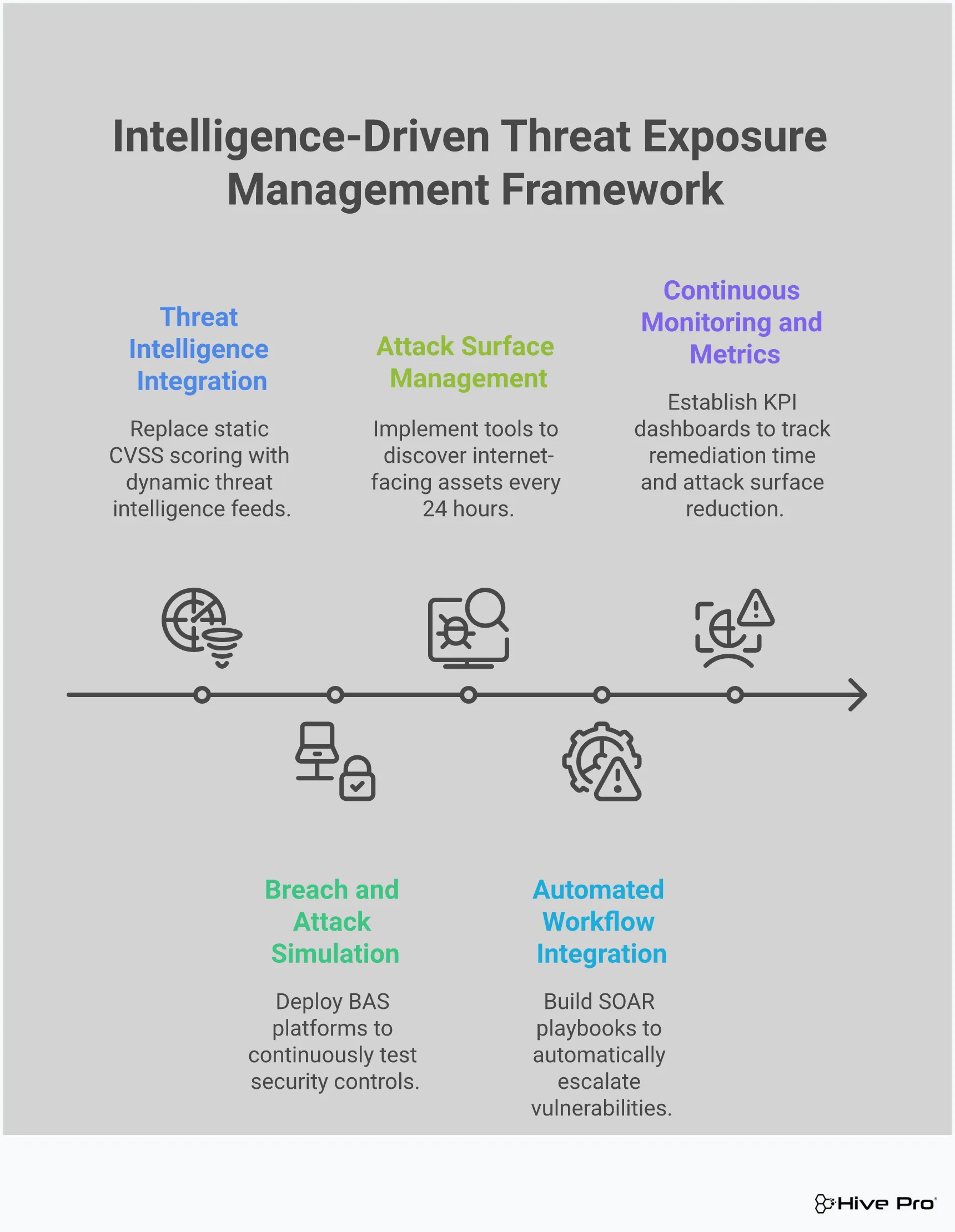
Go Beyond Generic Vulnerability Scores
For years, security teams have relied on the Common Vulnerability Scoring System (CVSS) to rank vulnerabilities. While CVSS provides a useful baseline, it has a major limitation: it doesn't consider real-world context. A vulnerability with a "critical" score might not have a public exploit or be difficult for an attacker to reach. Meanwhile, a "medium" vulnerability could be part of a widely used exploit kit. Threat intelligence bridges this gap by adding layers of context. It tells you if a vulnerability is trending among threat actors, if proof-of-concept code exists, or if it’s being used in active campaigns. This allows you to create a vulnerability and threat prioritization strategy based on actual risk, not just a theoretical score.
Prioritize Risks Based on Active Threats
Not every threat is a threat to you. A sophisticated threat actor targeting financial institutions in Europe might not be relevant if you're a healthcare provider in North America. Threat intelligence helps you understand the specific threats targeting your industry, geography, and technology stack. By combining intelligence with a clear view of your assets, you can make much more informed decisions about where to focus your efforts first. This context is crucial for an effective Threat Exposure Management (TEM) program. It helps you connect the dots between a vulnerability in your environment and an adversary’s motivation and capability to exploit it, ensuring you’re always working on the most pressing issues.
Pinpoint Which Vulnerabilities Are Actively Exploited
The single most important question you can ask about a vulnerability is, "Is anyone actually exploiting this in the wild?" Threat intelligence provides the answer. By integrating data from sources like the CISA KEV (Known Exploited Vulnerabilities) catalog and proprietary research from teams like HiveForce Labs, you can immediately identify which vulnerabilities are being used in active attacks. A TEM program integrates this intelligence to detect and analyze emerging attack methods that could harm your organization. This allows you to push actively exploited vulnerabilities to the top of your remediation queue, dramatically reducing your window of exposure and staying ahead of attackers.
The Real-World Benefits of an Intelligence-Driven Strategy
Integrating threat intelligence into your Threat Exposure Management (TEM) program isn't just a theoretical exercise. It’s about creating tangible, day-to-day improvements that strengthen your security posture and make your team's life easier. When you ground your security strategy in real-world data about active threats, you shift from a reactive, checklist-based approach to a proactive, intelligence-led one. This means focusing your limited time and resources on the risks that truly matter, leading to faster response times, a more resilient defense, and a more empowered security team.
Detect and Respond to Threats Faster
In security, speed is everything. But you can't be fast if you're chasing down every single alert. An intelligence-driven approach helps you cut through the noise by adding critical context to your vulnerability data. Instead of just seeing a high CVSS score, your team can see if that vulnerability is part of a known exploit chain or is being used by a threat actor targeting your industry. This allows you to make more informed decisions about which assets to prioritize first. By combining threat intelligence with a clear view of your attack surface, you can quickly pinpoint your most critical exposures and take action, drastically reducing your mean time to respond (MTTR).
Reduce False Positives and Alert Fatigue
Constant, low-context alerts are the enemy of an effective security operations center. They lead to alert fatigue, where your analysts become desensitized and real threats get missed. Threat intelligence acts as a powerful filter, helping you validate which alerts represent genuine risks. By correlating internal security events with external intelligence, you can confirm whether suspicious activity matches the tactics, techniques, and procedures (TTPs) of a known adversary. This validation reduces false positives, allowing your team to focus its energy on investigating and mitigating credible threats. This focused approach helps you optimize response capabilities and achieve better overall risk management outcomes.
Defend Proactively Against Emerging Threats
A truly mature security program doesn't just respond to attacks—it anticipates them. Threat intelligence gives you the foresight to defend against emerging threats before they impact your organization. By analyzing intelligence feeds and reports from sources like our HiveForce Labs, you can understand the new attack methods and campaigns that are gaining traction. This allows you to proactively hunt for indicators of compromise (IOCs), adjust your security controls, and patch vulnerabilities that are likely to be targeted next. Instead of waiting to become a victim, you can stay a step ahead of attackers by hardening your defenses against their evolving strategies.
Empower Your Security Team to Make Better Decisions
Ultimately, an intelligence-driven strategy is about empowering your people. When your security team has access to timely, relevant, and contextualized threat intelligence, they can move from guesswork to confident action. This transforms their role from simply managing alerts to strategically reducing the organization's threat exposure. Providing your team with a unified view of cyber risks fortified with threat intelligence builds a more dynamic and proactive security culture. It gives them the tools and the confidence they need to make better, faster decisions, which not only strengthens your defenses but also improves team morale and retention.
How Breach and Attack Simulation (BAS) Strengthens Your TEM Program
Think of your Threat Exposure Management (TEM) program as the blueprint of your security defenses. It shows you where your assets are, what vulnerabilities exist, and which threats pose the biggest risk. But how do you know if those defenses will actually hold up under pressure? That’s where Breach and Attack Simulation (BAS) comes in. BAS is the active, hands-on testing that turns your theoretical understanding of risk into practical, real-world proof.
Instead of waiting for an actual attack to see where your weaknesses lie, BAS platforms safely and automatically simulate attacker behaviors within your environment. It’s like having a dedicated red team on call 24/7, constantly pressure-testing your controls. By integrating BAS, you move beyond just identifying exposures and start actively validating your ability to stop them. This continuous feedback loop is what transforms a good TEM program into a great one, giving you the confidence that your security measures work as intended. This process of adversarial exposure validation is critical for building a truly resilient security posture.
Validate Security Controls with Real-World Scenarios
You’ve invested a lot in your security stack—firewalls, endpoint detection, email gateways, and more. But are they configured correctly? Are there gaps in your coverage? BAS helps you answer these questions with certainty. It runs controlled attack simulations that mimic the exact paths a real attacker would take, from initial access to data exfiltration. This isn't a theoretical exercise; it's a practical test of your defenses in their live environment.
By simulating these real-world scenarios, you can see precisely which controls succeed and which ones fail. Maybe a misconfigured firewall rule lets an attacker move laterally, or your EDR solution fails to detect a specific fileless malware technique. BAS pinpoints these specific failures, providing clear, actionable evidence you can use to fine-tune your tools and close gaps before an adversary finds them.
Test Your Defenses Against Known Threat Actor Tactics
Not all attacks are created equal. The techniques used by a ransomware group targeting hospitals are very different from those used by a state-sponsored actor stealing intellectual property. An effective TEM program needs to account for the threats that are most relevant to you. BAS allows you to test your defenses against the specific tactics, techniques, and procedures (TTPs) used by the adversaries you’re most likely to face.
This is where threat intelligence becomes so powerful. A strong BAS platform integrates the latest threat advisories to simulate current and emerging attack campaigns. This allows you to move from asking a generic question like, "Are we secure?" to a much more specific one: "Can we stop the latest TTPs used by FIN7?" This targeted approach ensures your team is preparing for the threats that actually matter, not just chasing theoretical vulnerabilities.
Continuously Validate Your Exposure Management Strategy
Your IT environment is in a constant state of change. New assets are added, software is updated, and configurations are tweaked daily. A security assessment that was accurate last month might be obsolete today. Because of this constant flux, validation can't be a one-time event. BAS makes it possible to continuously validate your security posture and ensure your defenses remain effective over time.
By running simulations automatically and on a regular basis, BAS provides a constant feedback loop for your TEM program. When your team remediates a vulnerability, you can immediately run a simulation to confirm the fix is effective. This ongoing validation is a core principle of a Continuous Threat Exposure Management (CTEM) program. It ensures that your security posture doesn't drift and that your defenses are always prepared for the next threat.
Common Challenges in Integrating Threat Intelligence
Integrating threat intelligence into your security program is a game-changer, but let’s be real—it’s not always a simple plug-and-play process. While the promise of an intelligence-driven strategy is huge, many teams run into a few common roadblocks that can stall progress. The good news is that these challenges are well-understood, and with the right approach, you can clear these hurdles and start seeing the benefits. The goal isn't just to have threat intelligence; it's to make it a seamless, actionable part of your daily security operations. This means turning raw data into clear priorities and confident actions that reduce your organization's real-world exposure.
The key is to anticipate these issues before they slow you down. From managing a flood of data from multiple sources to getting your team on board with new processes, being prepared is half the battle. It requires a thoughtful strategy that considers your technology, your people, and your existing workflows. Too often, organizations invest in expensive threat feeds without a clear plan for how to operationalize the information, leading to frustration and wasted resources. Let's walk through the three biggest challenges you might face—data overload, resource gaps, and cultural resistance—and, more importantly, how you can get ahead of them to build a more resilient and proactive defense.
Overcoming Data Overload and Complex Integrations
One of the first things you’ll notice is that there is no shortage of threat data. The challenge isn’t finding intelligence; it’s sifting through the noise to find what’s relevant to you. Teams often get buried under an overwhelming amount of data from dozens of feeds, making it nearly impossible to prioritize effectively. When you’re drowning in alerts, it’s easy to miss the ones that actually matter. This data overload is compounded by the fact that poor integration is a major pain point for many organizations. A recent state of threat intelligence report found that nearly half of security professionals cite it as a significant challenge. Without a unified platform to aggregate and contextualize information, your expensive threat feeds become little more than digital paperweights.
Addressing Resource and Skill Gaps
Having great intelligence is one thing, but you also need people who know what to do with it. Many security teams are already stretched thin, and they often lack the specialized expertise needed to interpret and act on complex threat data. This skills gap can stop a threat intelligence program in its tracks before it even gets started. You can’t just hand your team a raw data feed and expect them to connect the dots to your organization’s unique attack surface. This is where a Continuous Threat Exposure Management (CTEM) approach becomes so valuable. Instead of relying on manual analysis, a CTEM platform can automate much of the heavy lifting, allowing your existing talent to focus their energy on strategic remediation rather than endless research.
Driving Change in Your Culture and Processes
Perhaps the most significant challenge has less to do with technology and more with people. Truly integrating threat intelligence requires a cultural shift from a reactive to a proactive security mindset. It’s about moving beyond the traditional cycle of scanning and patching and adopting a continuous process of identifying, validating, and mitigating risks. This isn’t just a new workflow; it’s a new way of thinking about security. This kind of change can be met with resistance if not managed carefully. A successful threat exposure management program is built on a foundation of collaboration and continuous improvement, breaking down silos between security, IT, and DevOps teams to foster a shared sense of responsibility.
A Practical Guide to Integrating Threat Intelligence
Integrating threat intelligence isn't just about buying a new data feed; it's about fundamentally changing how your security program operates. It requires a thoughtful approach that combines clear goals, smart automation, teamwork, and the right technology. When you get these pieces right, you move from simply managing vulnerabilities to proactively reducing your threat exposure. This practical guide will walk you through the essential steps to build a truly intelligence-driven program that delivers real results.
Set Clear Objectives for Your Program
Before you dive into feeds and tools, you need to know what you’re trying to achieve. What does success look like for your threat intelligence program? Your objectives should be specific, measurable, and tied directly to your organization's security posture. Instead of a vague goal like "be more secure," aim for something concrete, such as "reduce the mean time to remediate critical vulnerabilities by 30%." An effective Threat Exposure Management (TEM) program is built on clear goals that cover continuous monitoring, attack surface management, and intelligence-led vulnerability prioritization. Defining these objectives upfront gives your team a clear roadmap and helps you demonstrate the value of your efforts to leadership.
Build Automated, Intelligence-Driven Workflows
Manual processes can’t keep up with the speed of modern threats. To make threat intelligence truly effective, you need to embed it into your daily operations through automation. This means creating workflows that automatically enrich security alerts, prioritize vulnerabilities based on real-time threat data, and even initiate remediation actions. For example, you can configure your system to automatically escalate a vulnerability if threat intelligence shows it's being actively exploited by a known ransomware group. By connecting your intelligence sources with your security tools, you create a seamless, continuous threat exposure management strategy. This frees up your team from tedious manual work and allows them to focus on strategic defense.
Create a Culture of Collaborative Intelligence Sharing
Threat intelligence is most powerful when it’s shared. Your security operations, vulnerability management, and IT teams all need to be on the same page, working from a single source of truth. Fostering a culture of collaboration ensures that insights from threat intelligence aren't stuck in a silo. When your teams combine intelligence with deep asset visibility, they can make much more informed decisions about where to focus their efforts. A unified platform that provides a clear view of your organization's risk posture can be a game-changer here, helping everyone understand which assets to prioritize and why. This shared context is key to making fast, effective security decisions across the board.
Choose the Right Tools and Technology
The right technology acts as the engine for your intelligence-driven TEM program. Look for tools that do more than just aggregate data feeds. You need a platform that can ingest diverse intelligence sources, correlate them with your specific asset inventory, and provide clear, actionable vulnerability and threat prioritization. The best solutions integrate threat intelligence with other core security functions, like External Attack Surface Management (EASM) and Breach and Attack Simulation (BAS). This integration allows you to not only identify potential exposures but also validate that your security controls are working as expected. Choosing a comprehensive platform helps you optimize your response capabilities and improve your overall risk management outcomes.
How to Measure the Success of Your Program
An intelligence-driven threat exposure management program feels effective, but you need the numbers to prove it. When you can clearly demonstrate progress, you not only validate your strategy but also justify the ongoing investment in your team and tools. It’s about showing how your efforts directly reduce risk and strengthen the organization's security posture. This moves your program from a cost center to a clear business enabler, giving you the support you need to keep maturing your defenses. Measuring success isn't just about reporting; it's about building confidence—in your team, your strategy, and your leadership.
Key Performance Indicators (KPIs) to Watch
The right KPIs tell a story of meaningful progress, not just busy work. Instead of tracking the total number of patched vulnerabilities, focus on metrics that reflect a true reduction in risk. A great place to start is by measuring the Mean Time to Remediate (MTTR) for critical vulnerabilities that your threat intelligence has identified as actively exploited. You should also track the overall reduction in your total attack surface over time. If you’re using breach and attack simulation, watch for improved scores against specific threat actor tactics. This shows your defenses are getting stronger where it counts and that your team is effectively managing exposure.
Proving the ROI of Your Threat Intelligence Investment
Connecting your KPIs to business value is how you demonstrate a clear return on investment. Faster detection and response times, informed by threat intelligence, directly reduce the potential financial impact of a breach. When you can show that your team is spending less time on false positives and more time on genuine threats, you’re proving resource optimization. Integrating threat intelligence helps you make smarter, more informed decisions about which assets to prioritize first. This focus prevents wasted effort on low-risk issues and ensures your security budget is used to address the most imminent risks to the business.
Related Articles
- Mastering Exposure Management: Cybersecurity Best Practices
- What is CTEM? A Proactive Cybersecurity Guide
- Top Benefits of Vulnerability Prioritization
- Exposure Validation Revolution: Proving Your Defenses Against Real Attacks
- Test Like an Attacker, Not an Auditor | Hive Pro
Frequently Asked Questions
How is Threat Exposure Management (TEM) really different from the vulnerability management we're already doing? Think of it as an evolution. Traditional vulnerability management often focuses on a reactive cycle of scanning and patching based on a long list of vulnerabilities. Threat Exposure Management is a proactive and continuous strategy. It expands the view to your entire attack surface—not just servers, but cloud assets, code, and identities—and uses an attacker's perspective to prioritize which weaknesses actually pose a real threat to your business. It’s less about patching everything and more about strategically reducing your most critical exposures first.
We already use CVSS scores to prioritize. Why do we need threat intelligence on top of that? CVSS scores are a great starting point, but they exist in a vacuum. A vulnerability might have a "critical" 9.8 score but be incredibly difficult to exploit in the real world. On the other hand, a "medium" vulnerability might be part of an active ransomware campaign. Threat intelligence adds that essential real-world context. It tells you which vulnerabilities are being actively exploited by attackers right now, allowing you to focus your team's limited time on the handful of issues that present a clear and present danger.
My team is already swamped. How can we realistically add threat intelligence without getting overwhelmed? This is a common concern, and the key is to avoid trying to drink from the firehose. Instead of subscribing to dozens of raw data feeds, start with a focused, integrated approach. A good TEM platform does the heavy lifting for you by automatically correlating threat intelligence with your specific assets and vulnerabilities. This turns a flood of data into a clear, prioritized to-do list, allowing your team to act confidently without needing to become full-time threat researchers.
How does Breach and Attack Simulation (BAS) fit in? Isn't that just another name for penetration testing? While they both test your defenses, they serve different purposes. A penetration test is typically a manual, point-in-time engagement that provides a snapshot of your security. Breach and Attack Simulation is an automated and continuous process. It constantly runs safe, simulated attacks against your security controls to validate that they are working correctly 24/7. This gives you an ongoing feedback loop to ensure that a fix you applied last week is still effective today.
What's the first practical step my team can take to move toward an intelligence-driven approach? The most important first step is to get a complete and accurate picture of your attack surface. You can't protect what you don't know you have. Once you have a solid inventory of all your digital assets, you can begin to overlay threat intelligence to understand where your true risks lie. This foundational visibility is what allows you to move from guessing what to fix to knowing exactly where to focus your efforts for the biggest impact.