Schedule a free demo of the Uni5 Xposure platform. Learn how the MITRE D3FEND framework complements ATT&CK to validate and secure your cybersecurity posture.
The MITRE D3FEND framework is a defensive knowledge graph that maps countermeasures directly to offensive tactics in the MITRE ATT&CK matrix. Maintained by the MITRE Corporation, D3FEND establishes standardized security controls, enabling enterprise CISOs to systematically harden systems, detect adversaries, isolate threats, and validate defensive postures against real-world techniques.
What Is the MITRE D3FEND Framework?
The MITRE D3FEND framework is a detailed knowledge base for cyber defense. It acts as a map of the ways a organization can stop an online attack. The MITRE Corporation built this tool to help people use the same words when they talk about security.
It is not just a list of tips. It is a knowledge graph that shows how many defense steps link to each other. This tool is an ontology. This means it creates a clear logic for how security tools work.
It gives teams a way to find gaps in their plan. It also helps them see if their tools do what the makers claim. By using this standard map, teams can plan their defense better. They can see which steps stop which threats.
Setting a Standard for Defense
The MITRE D3FEND framework started with a clear goal. The MITRE Corporation wanted to set a standard for the words used to describe defense tools.
In its first release, the team focused on patents. They chose patents because these files give deep details on how tools work. This focus helped build a base that is both deep and very exact.
Using this framework helps teams stay ready. NIST experts have found that security teams often struggle when knowledge bases are not full or clear.
D3FEND solves this by giving everyone a common set of terms. This helps teams pick the right tools for their exact needs. It also helps them talk to each other without doubt.
The framework lists many ways to find, stop, and fix threats. Each entry in the graph shows an exact move an expert can make. These moves range from simple file checks to hard network rules.
Experts can see the logic behind each move. This helps them build a strong security posture for their data. It also makes it easier to test if that security posture actually works.
The Link to MITRE ATT&CK
The MITRE D3FEND framework is the partner to the MITRE ATT&CK framework. While ATT&CK tracks what adversaries do, D3FEND tracks what you can do to stop them.
One looks at the offense. The other looks at the defense. Together, they give a full view of the cyber battle.
Security teams use both tools to plan their work. They look at ATT&CK to see how a adversary might enter. Then they use D3FEND to find the best way to block that path.
This makes their work more exact. They do not have to guess which tools will help them most. They can see the link between a threat and a fix.
This link is key for a strong threat exposure management plan. It helps teams move past just finding a risk.
They can take real action to fix it. This saves time and keeps the organization safe. It also helps leaders see the value in the tools they buy.
A Growing Knowledge Base
The MITRE Corporation keeps and grows this tool over time. They release new data every three months to keep up with new threats. This keeps the info fresh and useful for everyone.
Because it is stable, organizations can trust it for long term plans. It has become a core part of how modern security teams think. The goal of the framework is to make defense more clear.
It helps teams find product gaps that they might have missed. By checking what a tool says it does with the D3FEND map, teams can see the truth.
This makes it easier to build a better security stack. It also helps teams stay ahead of the people trying to break in.
As the cyber world changes, the framework will change too. It will add new ways to stop attacks as they appear. This makes it a living tool for defenders everywhere.
It gives them a way to share what works and learn from others. This shared knowledge makes every organization stronger against online threats.
D3FEND vs. ATT&CK: Understanding the Offensive-Defensive Dynamic
The MITRE group keeps both the ATT&CK and D3FEND guides to help teams speak a common way. They both want to keep data safe, but they look at the task from two sides. The ATT&CK guide records how adversaries act. The MITRE D3FEND framework is a map for defensive actions. Using both helps leaders build a full view of their risk.
How ATT&CK Focuses on the Adversary
The MITRE ATT&CK framework tracks common steps that adversaries take during a breach. It lists real-world ways seen in actual cyber attacks. This focus on the adversary helps teams know what to watch for. By knowing how a threat group moves, you can find gaps in your current tools.
Security teams use ATT&CK to build attack paths and see how a breach might spread. This work is a key part of threat exposure management because it shows which assets are at most risk. It turns vague threats into a clear list of moves that a team must stop.
How D3FEND Focuses on Defensive Countermeasures
The MITRE D3FEND framework is a graph that lists defensive countermeasures and how they stop attacks. It is the match for the offensive focus of ATT&CK. D3FEND maps specific defense moves to the ways used by adversaries. This helps teams move past just finding a threat to taking action to block it.
Teams often find it hard to link these two guides by hand because they are so large. Research from NIST shows that tech tools can help people find the right defensive countermeasures faster. D3FEND gives a standard way to talk about what safety tools can actually do. The table below shows how these two models differ.
| Dimension. | MITRE ATT&CK. | MITRE D3FEND. |
|---|---|---|
| Main focus. | adversary moves. | defensive countermeasures. |
| Core setup. | Matrix of ways. | Graph of defenses. |
| Data source. | Real-world incidents. | Patents and code. |
| Target group. | Threat hunters. | System builders. |
| Main aim. | Show how adversaries strike. | Show how to stop strikes. |

Building a unified security posture
A strong defender needs both sides. You must know the threat to pick the right security posture. Security leaders use D3FEND to see if their tools have the right parts to stop the paths found in ATT&CK. This check helps find gaps in a setup before a adversary does.
Tools like Breach and Attack Simulation help teams test these guards in real time. By running a test, you can see if your D3FEND-mapped steps really stop an ATT&CK-based threat. This loop keeps your defender sharp as new threats appear each day.
The Core Structure and Taxonomy of the D3FEND Matrix
The MITRE D3FEND framework is a knowledge graph. It shows how tools stop cyber attacks. The matrix maps each fix to a clear threat. This helps teams see how their tools work against real risks. By using this graph, pros can plan better ways to keep data safe.
How the Matrix is Built
The matrix uses a clear set of layers. It groups steps into tactics, techniques, and sub-techniques. This layout makes it easy to find the right tool for any job. Each layer adds more detail to the plan. This structure helps teams align their work with the MITRE ATT&CK framework by using common terms.
Common terms allow organizations to compare other products. Many teams use the matrix to see where they have gaps. Experts at NIST note that most knowledge bases are not yet full. Using a standard list makes it easy to spot missing features. It ensures that everyone on the team uses the same names for the same tasks. This leads to faster work and fewer mistakes.
Key Tactics in the Matrix
The top level of the MITRE D3FEND framework is defined by key tactical categories that represent the core activities of defensive engineering.
- Harden: Measures to reduce the attack surface of systems and applications, making them more resilient to exploit attempts.
- Detect: Countermeasures that identify active administrative anomalies, threat indicators, or unauthorized access within the enterprise environment.
- Isolate: Controls designed to contain threats and prevent lateral movement across the internal network or cloud boundaries.
- Deceive: Defensive actions that deploy honeypots, decoy credentials, or fake resources to mislead adversaries and reveal their tradecraft.
- Evict: Steps to eradicate threat actors from compromised systems, terminate unauthorized sessions, and restore secure states.
To visualize how these tactics are organized, security teams often refer to the MITRE D3FEND matrix layout:
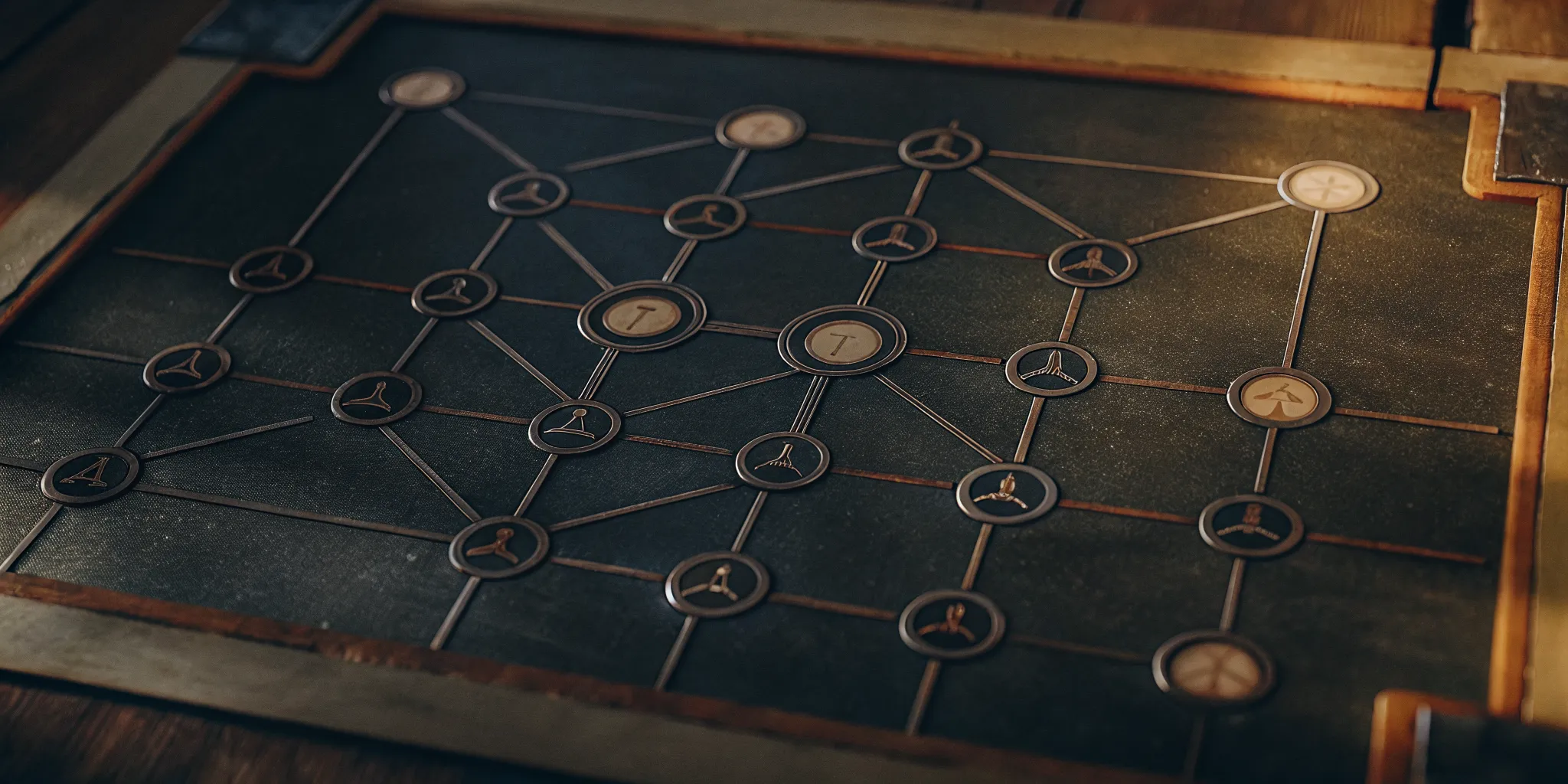
These tactics help set up defense features. They give a clear map for how to stop an attack at every stage. Teams can use these paths to test their own systems. This ensures that their tools can handle the latest threats. It also helps tech leaders make better choices when they buy new software. This helps organizations spend their money on the best tools.
The Role of Patents and Public Data
The first version of the matrix focused on patents. Patents are good because they show how a tool works in great detail. Creators have a big reason to be clear in these papers. This data helped build a solid base for the framework. It gave a rich set of facts about how defense tech works. This focus ensures that the matrix is built on real tech data.
The matrix also looks at open code and other public files. This mix of data ensures that the framework stays current. It draws from many places to keep the list of techniques full. This makes the matrix a trusted source for pros around the world. It provides a shared way to talk about defense that everyone can use. It helps teams build a stronger security posture every day.
How Does MITRE D3FEND Complement MITRE ATT&CK?
Security teams often use MITRE ATT&CK to track how adversaries work. It shows the steps an attacker takes to break into a system. But knowing what a adversary does is just the start. To stay safe, you need to know how to stop them. This is where the MITRE D3FEND framework helps. It acts as the defense half of the puzzle. While one tracks the attack, the other tracks the defense. Together, they give a full view of the cyber world.
Turning threat data into action
The main goal of these tools is to help teams move fast. MITRE ATT&CK is great at spotting a threat. But it does not tell you what to do next. D3FEND fills this gap by mapping defense steps to the tricks used by attackers. This link helps security teams move beyond simply finding a threat to using real defense plans. It changes the focus from "what is happening" to "how do we stop it."
Using the MITRE ATT&CK framework with D3FEND creates a loop of defense. Teams can see an exact attack method and find the right way to block it. This process helps build a stronger security state. It makes sure that every known threat has a plan to stop it. This path moves defenders from a reactive state to a more proactive one.
Mapping defense to offense
D3FEND is built as a knowledge graph. It shows how many security tools and tasks relate to attack methods. Experts use it to see which products or tech can stop a threat. By looking at a defense tool, they can find the tricks it blocks. This helps teams see where they have gaps in their security. It also helps them buy the right tools for their exact needs.
This mapping is not just about tools. It also covers best practices and system changes. A team might use D3FEND to find how to harden a server. Then they check ATT&CK to see which adversary moves that change would stop. This two-way view makes the whole security plan much smarter. It ensures that the team spends time on things that truly lower their risk.
Limits of manual defense
Even with these tools, building a defense can be a slow task. Experts often have to link these frameworks by hand. A report from the National Institute of Standards and Technology (NIST) warns that these knowledge bases are not always full. Experts may find it hard to get all the data they need in one place. They often have to look across many sites to find the best way to stay safe.
There are also limits to what the framework can do. D3FEND does not tell you which defense is best. It also does not rank them or show how well they work. This means a team must still test their own tools to be sure they are safe. Using frameworks like these is a big help, but it is just one part of a good security plan.
Practical Applications: Security Control Selection and Validation
Picking and Comparing Tools
Security teams use the MITRE D3FEND framework to build a strong security posture. It helps them move past just finding threats. Instead, they can take real steps to stop attacks. This framework gives teams a clear way to see what their tools can truly do. It turns complex data into a list of steps that work. Many teams struggle to know if a new tool is worth the cost. By using a standard list of defense moves, you can see how tools differ. This makes it easy to find gaps in your current setup. You can compare what a product says it does with what you actually need. This leads to better buying choices and a safer network.
- Check your current tools. List the defense steps your current products say they take.
- Compare different products. Use the standard terms in D3FEND to see how tools differ from one another.
- Find gaps in your plan. Compare what you have to the full framework to find missing pieces in your security.
- Link defense to offense. Connect your defense moves to the specific ways that adversaries try to break in.
- Create a test plan. Pick a mix of attack moves to see if your security posture holds up under stress.
- Verify the results. Use the data from your tests to fix any weak spots in your defense.
Mapping Defenses to Offense
Research from NIST shows how to make this work much faster. Experts use smart tech to link offensive moves to defense steps. This helps teams find the right fix in less time. Smart tools can look at how an attack works and suggest the best way to stop it. This mapping of countermeasures saves time and cuts down on hard work for security teams. In the past, staff had to do this by hand. Now, they can use tools that find the best match in seconds. This means your team can act fast when a new threat pops up.
New tests use large language models like RoBERTa to find these links. This semantic mapping is much better than old ways of searching. It looks at the meaning behind the words to find the best match. Test results from NIST prove that this path is very accurate. It gives teams clear tips that they can trust. This tech helps bridge the gap between knowing about a threat and stopping it. It lets teams build a defense that is based on facts, not guesses.
Building Better Test Plans
A good defense needs proof that it works. Security teams use D3FEND to build better test plans. These plans check if a product really does what it says it will do. You can pick a few attack moves and see if your tools stop them. This sort of testing is the best way to know if your spend was worth it. It helps you see how well a defense product performs in the real world.
By using these test plans, you can find weak spots before a adversary does. You can try out different sets of attack moves to see how your security posture holds up. This makes your security much more robust. It turns your defense into a data-led security posture that is always ready for a fight. You can use Breach and Attack Simulation to prove your tools work as they should. When you have proof, you can focus on more important tasks. This is how modern teams stay ahead of the curve.
Operationalizing Attack and Defense with Hive Pro Uni5 Xposure
Modern security teams must do more than just find threats. They need to know how to stop them. Most teams use the MITRE ATT&CK set to see how adversaries move. But knowing the attack is only half the job. To build a strong wall, you need the MITRE D3FEND framework. This tool maps defense steps to attack moves. It helps you see which locks work for which keys. Using these maps together lets you build a plan that works.Bridging the Gap Between Attack and Defense
The MITRE ATT&CK framework records real-world adversary behavior, tracking their tactics, techniques, and tools. As its counterpart, the MITRE D3FEND framework provides a structured mapping of defensive countermeasures to neutralize those threats. However, manually correlating these massive models presents massive administrative overhead. A study from NIST highlights that manual mapping is resource-intensive, which is why automated exposure validation tools are crucial. Hive Pro Uni5 Xposure bridges this gap by unifying threat intelligence and defensive controls in a single pane of glass. By integrating the threat exposure management lifecycle, Uni5 Xposure scans your attack surface, models adversary attack paths, and correlates them with the exact D3FEND countermeasures needed for remediation. This converts fragmented security data into an actionable, priority-driven defense plan for security operations.The Five Stages of Exposure Control
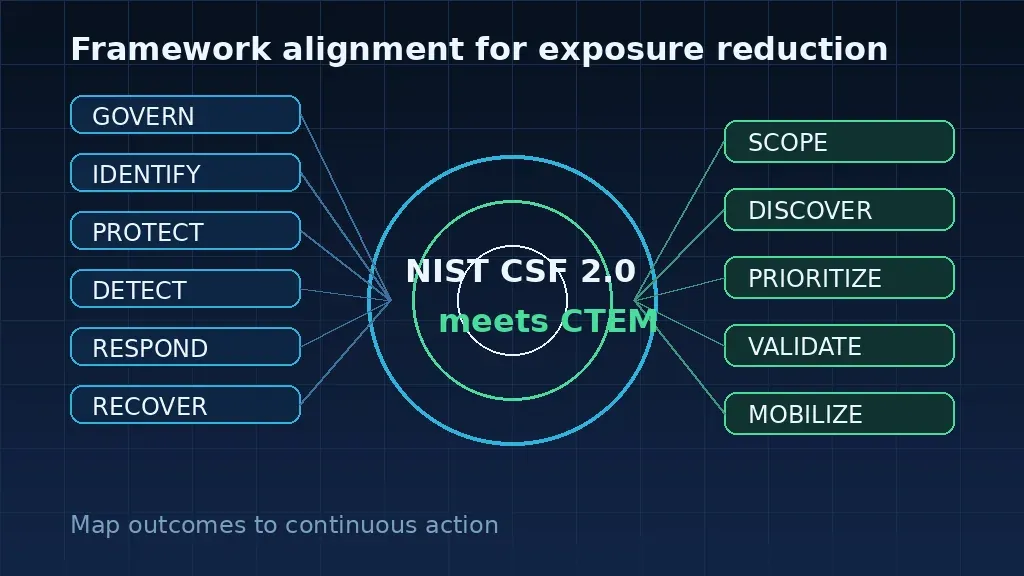
Hive Pro Uni5 Xposure operationalizes Continuous Threat Exposure Management (CTEM) through five distinct phases:- Scope: Aligning security activities with business objectives to define the organizational attack surface.
- Discover: Conducting continuous asset discovery and vulnerability scanning to uncover hidden assets, configurations, and internal dependencies.
- Prioritize: Filtering out low-level noise and prioritizing exposures based on business criticality and active threat activity.
- Validate: Using automated Breach and Attack Simulation (BAS) to validate defensive controls. This allows security teams to verify if their security posture successfully prevents, detects, or contains threat actions.
- Mobilize: Providing security teams with prescriptive, prioritized remediation guidance to efficiently eliminate critical attack paths.
Smart Focus with HiveForce Labs
Enterprise security teams cannot remediate thousands of vulnerabilities simultaneously. Security operations must focus on imminent threats. Hive Pro addresses this by infusing actionable cyber threat intelligence from HiveForce Labs into its platform. HiveForce Labs monitors global threat landscapes, tracking which vulnerabilities are actively being exploited in the wild by persistent threat actors. When this intelligence is combined with the MITRE D3FEND framework, it empowers security teams to focus on exploitable vulnerabilities on high-value assets and deploy precise, validated countermeasures. Rather than reacting blindly, organizations gain a proactive, intelligence-driven defensive posture.Frequently Asked Questions
How does MITRE D3FEND complement the MITRE ATT&CK framework?
The MITRE D3FEND framework acts as a defensive partner to the offensive ATT&CK model. While ATT&CK tracks how attackers behave, D3FEND lists the specific ways to stop them. It maps protection tools to threat tactics. This link helps teams move from just seeing a risk to taking clear action. According to MITRE, this graph builds a shared language for both attack and defense.
Does MITRE D3FEND measure the effectiveness of security controls?
No, the MITRE D3FEND framework does not rank or score how well a tool works. It serves as a catalog of methods rather than a list of the best ones. The framework does not give a higher rank to one method over another. It also does not say if one control is better than the rest. According to the MITRE FAQ, D3FEND does not show the strength or success of any specific defense.
Can organizations use D3FEND to identify gaps in security products?
Yes, teams can use this framework to find gaps in their safety tools. D3FEND provides a standard way to look at what products claim to do. By using this list, a organization can compare different tools with the same terms. This makes it easier to see what is missing in their defense plan. According to MITRE, this process helps find product gaps in a clear and steady way.
How can D3FEND help security teams build offensive test plans?
Teams can build test plans by linking defensive steps to offensive acts. First, a team finds the protection methods they already use. Then, they search the framework for the attack types that match those methods. This allows them to create a test to see how well their tools perform in a real attack. As noted by MITRE, this testing helps verify if a product does what it claims.
Ready to bridge the gap between attack and defense?
Waiting to map your defensive security posture means you are flying blind while attackers move fast and look for easy ways into your most private company data. If you do not link your defense to known threats now, you stay one step behind the risk and leave your security team at a big loss. This delay costs you time and lets small gaps turn into major entry points that adversaries can use to hurt your business and your best clients. Starting today, you can request a plan using the MITRE D3FEND framework to build a much stronger wall that stops moves found in the ATT&CK list.
Ready to schedule? Schedule a free demo of the Uni5 Xposure platform to talk to a security expert.