Identity Exposure Management: Why It Matters


Millions of corporate credentials leak onto the public internet every single week. These exposed credentials act as open doors for threat actors looking to breach hybrid networks. When security teams rely only on legacy tools, they remain blind to these silent entry points.
Book a HivePro demo to see how identity exposure management can shrink exploitable attack paths.
Identity exposure management is a proactive cybersecurity discipline that identifies, assesses, and mitigates credential leaks and security weaknesses across an organization's digital attack surface. This security practice reduces corporate risk by unifying visibility across hybrid environments, exposing misconfigured active directory settings and leaked passwords before attackers exploit them. According to industry guidance from Rapid7 exposure management guidance, this systematic approach helps security teams move from reactive incident response to continuous, proactive risk reduction. By continuously analyzing the complex relationships between active user credentials and corporate assets, organizations can neutralize dangerous lateral-movement pathways before real damage occurs. Implementing these integrated controls ensures that dynamic identity-based vulnerabilities are prioritized and resolved quickly, protecting sensitive corporate databases from unauthorized access.
Understanding how to secure these complex identity systems is essential for modern cybersecurity leaders. To protect your enterprise from credential exploitation, you must first look at how this proactive security strategy works in practice. What is identity exposure management? The path begins with
What is identity exposure management?
Corporate networks are changing fast. Thanks to hybrid work and cloud adoption, users and resources are more widely distributed than ever before. This shift is a major factor behind why cybersecurity and identity management have become so vital for modern business. Organizations must now secure a complex web of users, devices, and cloud services.
The core components of identity risk
Most businesses use a hybrid identity model. They sync on-premises Active Directory with cloud services so people can work from anywhere. But this setup often leaves gaps. Attackers look for these gaps to steal credentials, escalate privileges, or move through networks. According to federal guidelines on reducing internet-facing exposures, misconfigured systems and default logins are often publicly searchable online. When a corporate account has weak controls, it becomes an open doorway into private corporate data.
Identity threat exposures usually fall into a few main categories. First, password exposures let attackers see cleartext passwords or weak hashes. Next are privilege escalators. These flaws enable hackers to gain administrative rights that they do not deserve. Finally, lateral movers allow threat actors to travel undetected between different systems, weakening your security tools.
How security teams reduce the attack surface
To protect these assets, teams must do more than reset passwords. They need to find risky relationships between accounts and systems. This process means looking at how users, permissions, and roles connect. For instance, some users hold admin rights they never use. Others might use weak authenticators. These issues create a high risk of account takeover attacks if credentials are stolen. By assessing these risks in context, teams can see which gaps are most dangerous. They can then fix the worst exposures first.
Security teams can use several methods to clean up their identity footprint. These methods include:
- Auditing Active Directory to find and remove old, unused user accounts.
- Checking for default credentials and weak passwords across all systems.
- Reducing administrative rights so users only have the access they need.
- Monitoring authentication flows for signs of stolen credentials or bypassed controls.
Identity and threat exposure management
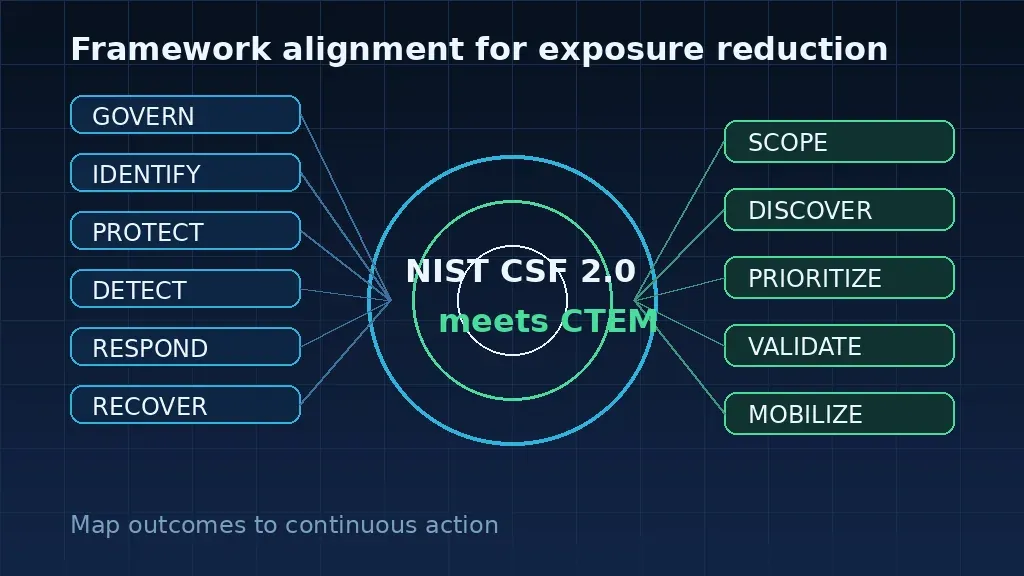
Modern defense requires linking user identity directly to your broader security strategy. This is where the Uni5 Xposure CTEM platform comes in. HivePro views identity as a core pillar of the modern attack surface. Through the Uni5 Xposure platform, teams can track identity threats alongside standard software vulnerabilities. This approach aligns directly with the five stages of Gartner's continuous threat exposure management framework. Specifically, teams use threat intelligence to prioritize and validate identity exposures. This helps them see if a weak credential is actively being used by attackers in the wild.
Why identity is now the primary attack path
Traditional security tools focus on software patches. But attackers today prefer to bypass these tools by logging in with valid user accounts. This shifts the focus of security teams. They must use continuous exposure reduction to find security gaps before attackers do.
Legacy security tools often miss the context of identity-based threats. They scan for code flaws but they fail to see how users actually access the network. This blind spot means a single weak password can expose a fully patched environment. Today, security leaders must treat identity as a core part of their attack surface.
Security gaps in hybrid networks
The shift to remote work forced companies to use distributed cloud networks. According to research on cybersecurity and identity management, this distributed model makes networks harder to secure. Many firms sync on-premises Active Directory accounts with cloud tools. But if an attacker steals a synced hash, they can jump from local servers straight to cloud apps.
The threat of exposed credentials
Attackers do not need complex tools to break into a network. They often use leaked login details that are publicly available. The guidance on internet exposure reduction from CISA warns that default passwords and misconfigured systems are primary reasons for public leaks. When users reuse simple passwords, attackers can easily find and use them to gain access.
To stop these entry points, security teams use identity exposure management. This process helps teams scan the web and find exposed passwords before threat actors can exploit them. Without this search, you may only learn of a leak after a breach occurs. The National Institute of Standards and Technology warns that account takeover attacks are a direct result of stolen logins.
Risks from stale and non-human accounts
Many networks contain old accounts from former employees. These stale logins often retain high privileges, but nobody monitors their activity. Attackers also target non-human accounts, like service profiles and automated APIs. These automated profiles often lack basic security features like multi-factor authentication, which makes them easy to hack.
Finding these legacy and non-human accounts is a major challenge for security leaders. Many organizations do not have a full inventory of their digital assets and user accounts. Implementing Cyber Asset Attack Surface Management helps solve this visibility problem. This process maps every user account to its connected assets, making security gaps easy to see.
Once an attacker gains access to one weak account, they can easily move through your system. They look for overprivileged accounts to increase their reach. Using HiveForce Labs threat context helps teams find these hidden pathways. This data lets you spot and fix account weaknesses before an attacker can exploit them.
Credential exposure vs. identity exposure
Many teams confuse credential leaks with complete identity risk. Credential exposure involves compromised passwords, leaked API keys, and active security tokens. These secrets often show up on public repositories or dark web forums, acting as an open door. But this risk only shows one layer of your security posture.
Attackers use specialized search tools to find these assets quickly. According to federal guidance, misconfigured systems and default credentials are often publicly visible online. When these secrets leak, security teams usually respond by resetting passwords or rotating API keys. This reactive approach is helpful, but it does not address the underlying structure. It only fixes the immediate key, not the door itself.
The limit of credential security
Identity exposure goes far deeper than leaked passwords. It covers the full web of privileges, trust paths, and relationships across your network. For example, a single user might have excess privileges that connect to a service account. If an attacker gains access, they can move through these trust paths to reach your crown jewels. True security requires managing these complex relationships to stop lateral movement.
These issues often involve structural flaws like multi-factor authentication gaps and active directory misconfigurations. The National Institute of Standards and Technology warns that authentication risks can lead to complete account takeovers. When you only focus on secrets, you miss these toxic combinations of access. Organizations need to transition from reactive credential fixes to a broader posture of HivePro's CTEM approach. This allows teams to find and harden weak pathways before an adversary can use them.
The systemic nature of identity risk
Modern security teams use threat-informed exposure prioritization to prioritize their work. This method helps you look beyond isolated password resets to see how systems connect. Instead of chasing millions of alerts, you can focus on the critical pathways that attackers actually target. By analyzing these toxic combinations, you can stop threats before they turn into real breaches.
To build a strong defense, you must integrate identity security with overall attack surface data. This unified approach is the core of modern identity exposure management. It ensures that security teams can continuously discover and validate their actual risk. Hardening these pathways reduces your attack surface and keeps your critical resources safe from exploitation.
The role of identity exposure management
FeatureCredential ExposureIdentity ExposurePrimary focusStolen passwords, tokens, and active API keys.Excess privileges, trust paths, and misconfigurations.Risk scopeIsolated to a single user account.Systemic threat across the entire hybrid directory.Remediation actionResetting passwords and rotating active keys.Hardening permissions and removing redundant paths.Primary toolingDark web monitoring and credential checkers.Continuous threat exposure management platforms.
How does identity exposure management work?
Managing digital identities is a core part of securing a modern attack surface. Many organizations struggle with identity security today. Stolen credentials and weak access controls often give hackers an easy way into private systems. A complete security plan must go beyond simple vulnerability scanning. To stay safe, security teams need a clear process to find and fix identity risks before attackers exploit them.
This is where unified exposure management becomes valuable. It provides a structured way to find, track, and secure exposed accounts and keys. This process is called identity exposure management. It focuses on how hackers can abuse credentials to breach networks. Instead of just looking at software bugs, it evaluates how human access can be exploited.
The identity security process
Managing identity risks requires a clear framework. Many breaches start with compromised identities rather than software flaws. The National Institute of Standards and Technology provides guidance on digital identity risk management to help groups evaluate threat impacts. This model shows how fake logins or stolen credentials can lead to full account takeovers. A solid operating plan helps security teams find these risks before they turn into real incidents.
- Discover identities and credentials: Security teams must find all user accounts, access keys, and passwords across cloud and local networks. This step exposes hidden or forgotten accounts that could let attackers into the system.
- Map attack paths: After finding all identities, you need to map how they connect to systems and data. This step reveals risky relationships and paths that hackers could use to move through your network.
- Validate exposures: This phase tests whether an exposed credential actually poses a threat. You must verify if the account is active, has broad permissions, or can be used to bypass security rules.
- Prioritize by exploitability and context: Not all identity risks are equal. You must rank them based on how easy they are to exploit and the value of the connected systems.
- Remediate identity issues: Security teams can now take action to fix the highest risks. This involves forcing password resets, fixing configuration errors, or updating multi-factor authentication policies to block access.
- Monitor the environment continuously: Identity exposure is not a one-time project. Continuous scanning ensures you spot new exposed credentials, weak passwords, and risky permissions as soon as they appear.
Remediation and continuous monitoring
Fixing these risks is vital for shrinking your digital attack surface. According to CISA guidelines on internet exposure reduction, default configurations and old software often leave systems open to the web. Security teams must remove these exposures quickly to keep networks safe. Shifting from reactive fixes to proactive planning helps protect your most critical assets. This proactive focus makes it harder for attackers to find a foothold.
To make this process faster, security teams can use external threat intelligence signals. This data shows which credentials threat actors are actively targeting in the wild. By knowing what attackers want, you can focus on the most dangerous threats first. This strategy reduces manual work and helps secure your digital assets more efficiently. It ensures you fix the most critical issues before damage occurs.

Where identity fits in continuous threat exposure management
Identity exposure management should not sit apart from a CTEM program. It gives the program a view of who can reach what, which paths an attacker could use, and which fixes will reduce real risk fastest. Without that view, teams can spend too much time on asset lists and vulnerability counts while risky access paths stay open.
Identity context makes exposure data clearer
A server with a known flaw is important. A server with a known flaw, a stale admin account, reused credentials, and access to crown-jewel systems is more urgent. Identity context turns a technical finding into an attack path. That helps security teams decide what needs action now and what can wait.
HivePro frames this as part of HivePro Uni5 Xposure. The goal is not to collect more findings. The goal is to connect assets, threats, identities, and controls into a ranked view of risk.
Threat intelligence adds urgency
Not every weak identity control has the same risk. A service account with broad rights may be low priority until related credentials appear in breach data or the account sits on a known attack path. Threat intelligence helps security teams see which exposures attackers are likely to use.
This is where HivePro threat intelligence research becomes useful. It adds outside-in context to inside-out identity data. Teams can then focus on exposed credentials, abused identity systems, and access paths tied to active attacker behavior.
Validation keeps remediation honest
Identity fixes can look complete on paper and still fail in practice. A password reset may not close token risk. A removed role may not break a nested group path. A new MFA rule may not cover service accounts, legacy protocols, or emergency access.
CTEM closes that gap by pairing remediation with validation. Breach and attack simulation, control testing, and attack path checks show whether a fix reduced exposure. For identity exposure management, that means proving that the path is gone, not just proving that a ticket was closed.
What should you look for in an identity exposure program?
A strong identity exposure program is more than an identity tool. It is a repeatable way to find risky access, prove which paths matter, and remove the exposures that give attackers reach. The best programs combine identity data, asset context, threat intelligence, and validation.
Coverage across human and non-human identities
Start with coverage. The program should see employees, admins, contractors, service accounts, machine identities, API keys, tokens, and privileged roles. It should also cover hybrid environments, including Active Directory, Entra ID, cloud platforms, SaaS apps, and security tools.
Coverage matters because attackers do not care which team owns an identity. They follow the path that works. A dormant account, a reused password, or an unmanaged token can be enough to move from one system to another.
Attack-path priority, not flat scoring
Identity risk needs context. A weak password on a low-risk account is different from a weak password on an account that can change group policy or reach production systems. Look for a program that maps privileges, trust relationships, nested groups, and routes to critical assets.
This is also where asset context helps. Concepts from CAASM visibility can improve identity decisions because teams can see which assets matter most. Identity and asset data should work together, not live in separate queues.
Workflow and validation
The program should make remediation clear. Security teams need owners, recommended fixes, ticketing workflows, and proof that the exposure was reduced. A good identity exposure management program should answer three questions: what is exposed, why does it matter, and how do we know the fix worked?
Reporting matters too. Executives need trends, risk reduction, and business impact. Practitioners need paths, evidence, and exact fixes. If the program cannot serve both groups, it will struggle to move from findings to action.
Common mistakes that leave identities exposed
The compliance checklist trap
Many organizations treat digital identity security as a compliance checklist. They focus on passing audits instead of mapping actual attack paths. This approach creates a false sense of safety. It ignores how real hackers exploit connected systems to reach your most sensitive data.
A compliance-first mindset ignores how attackers link multiple small flaws together. A single user account might have weak security settings. By itself, this looks like a minor issue on an audit spreadsheet. But attackers can use that single account to find risky admin paths that lead to total system control.
To prevent this, organizations must shift to active asset attack surface management context. This process maps every asset and user account across the network. It shows the real routes an attacker can take. By doing this, security teams can focus on fixing the gaps that pose the highest risk.
Unmonitored paths and accounts
A major gap in security is the presence of stale accounts. When workers leave a company, their accounts often remain active in the system. Attackers find these quiet profiles and use them to gain access. These forgotten entry points are a primary challenge for modern exposure management teams.
Organizations also ignore service accounts that connect different applications. These accounts often have high privileges but lack multi-factor authentication. According to government alerts, misconfigured systems and default credentials are primary causes of public internet exposure. Without proper tracking, these accounts become silent pathways for attackers.
Siloed teams and unvalidated fixes
Another issue comes from siloed departments. The identity team and the security operations team rarely share their data. The identity team manages user groups, while security handles active alerts. This gap means neither group sees the full picture of the company attack surface.
Many organizations fail to validate their fixes. They may change a password or close an account but never check if the danger is gone. Many security teams face authentication risks like account takeovers from stolen or weak credentials. Unvalidated fixes leave risky paths open, which defeats the purpose of your security efforts.
Resolving these gaps requires a unified approach to identity exposure management. This practice joins identity details with threat intelligence to highlight active threats. It helps security teams validate their remediation steps in real time. By testing every fix, organizations can ensure that their defensive updates actually close the path.
Start a free 30-day Uni5 Xposure trial to validate identity and exposure risk in context.
Frequently Asked Questions
What is the difference between exposure management and vulnerability management?
Traditional vulnerability management focuses on identifying and patching software flaws in isolation. In contrast, identity exposure management evaluates vulnerabilities in their broader operational context. According to Rapid7 overview of exposure management, exposure management maps the entire digital attack surface to prioritize remediation efforts based on actual risk. This approach helps security teams address the complex, interconnected identity threats that legacy scanners often overlook.
How does identity exposure management reduce cyber risk?
Organizations often leave critical system weaknesses and identity flaws exposed on the internet. Cybercriminals target these gaps to gain initial access. According to Tenable, identity exposure management reduces this risk by unifying security visibility across the entire attack surface. This platform visibility allows teams to find and fix weak credentials, misconfigurations, and risky asset relationships before threat actors can exploit them.
What role does Active Directory play in identity exposure management?
Most modern businesses rely on a hybrid identity model that connects on-premises assets to cloud providers. Active Directory usually serves as the foundation for this directory system. According to Silverfort, threat exposures commonly stem from misconfigurations and weak privileges within Active Directory. Exposure management platforms continuously monitor this hybrid infrastructure to uncover risky relationships and harden the identity posture.
How do identity exposure management platforms handle exposed credentials?
Millions of corporate credentials end up exposed on the public internet every week. Platforms scan the web to detect these compromises in real time. According to research from Flare, automating the validation and remediation of these exposed accounts yields major cost savings. Modern tools integrate with identity providers to automatically disable compromised credentials or trigger immediate password resets.
Ready to reduce identity exposure?
Identity-based threats move fast, and hidden privileges, stale accounts, and risky access paths give attackers room to operate. HivePro helps security teams make identity exposure management a practical part of daily risk reduction, not a one-time audit. By aligning identity findings with continuous threat exposure management, teams can see which exposures matter most. Prioritize remediation by business impact, and reduce the paths attackers are most likely to use.
If your organization needs a clearer view of identity risk across users, roles, assets, and attack paths, talk with HivePro about building a more proactive exposure management program.