Book a demo to compare SIEM vs XDR vs SOAR and see how exposure management can prioritize and validate risks alongside your existing SOC tools.
Your SOC stack can detect incidents quickly and still leave urgent exposures untreated. That gap appears when teams compare platforms by alert handling alone, without asking which risks demand action before an incident.
SIEM vs XDR vs SOAR is not a choice between three tools that do the same job. SIEM centralizes log and event data for monitoring, investigation, and reporting, while XDR correlates security telemetry across endpoints, identity, cloud, email, and networks. SOAR orchestrates repeatable response workflows across connected security tools, helping analysts investigate, enrich, contain, and document incidents with greater consistency through established playbooks. CTEM and exposure management answer the question these systems do not solve alone: which known exposures warrant priority before malicious activity becomes an incident. For security leaders, the practical architecture is complementary: SOC platforms detect and respond, while exposure insight guides risk-based remediation decisions across the attack surface.
The decision, then, is not which acronym wins, but which operating gap each layer closes in your modern operating environment. Start with SIEM vs XDR vs SOAR: the fast comparison, then map CTEM to persistent unresolved exposure decisions. Here's how.
SIEM vs XDR vs SOAR: the fast comparison
SIEM, XDR, and SOAR address different security operations needs. SIEM organizes logs and events for monitoring and review. XDR joins signals from security controls to give detections more context. SOAR runs set workflows across connected tools. None is a full exposure management program on its own.
Core roles in one view
The shortest answer to SIEM vs XDR vs SOAR is simple. Use SIEM to see and search event history. Use XDR to connect detection signals. Use SOAR to carry out approved response tasks. Teams may deploy more than one because visibility, detection, and action are different jobs.
| Comparison point | SIEM | XDR | SOAR. |
|---|---|---|---|
| Primary purpose | Central monitoring and review | Correlated detection and review | Workflow orchestration and response. |
| Data handled | Logs and security events | Endpoint, identity, network, email, and cloud telemetry | Alerts, cases, playbooks, and tool actions. |
| Best contribution | Searchable operating record | Detection context across controls | Consistent action at speed. |
| Limitation | Does not rank exposures by itself | Starts from detection signals | Needs defined workflows and inputs. |
| Alongside exposure management | Supplies event context | Supplies active threat context | Supports response and remediation steps. |
Comparison takeaway: Use SIEM for the event record. Use XDR for correlated detection. Use SOAR for repeatable action.
The exposure management layer
Security leaders also need to decide what to fix before an attack is detected. That is where exposure management has a separate role. It focuses on finding, ranking, validating, and driving action on exposures across the environment.
A SIEM may hold evidence about an asset. XDR may show suspicious activity tied to it. SOAR may open a ticket or start a response step. Exposure management adds the risk-based view that guides teams toward exposures needing action first.
This distinction matters during planning. Incident tools help answer what happened, what is happening, and what response should run. An exposure program asks what may create harm next. It supports action while teams can still reduce risk.
A complementary deployment
These technologies are better read as layers than replacements. A SOC can retain SIEM for event visibility. It can use XDR for detection context and SOAR for repeatable action. A CTEM platform can then manage exposure work from discovery through remediation.
The stack should pass useful context between teams and tools. Exposure findings can shape review priorities and remediation work. Detection findings can inform risk choices. Response workflows can help move approved fixes or containment tasks into operation.
This design avoids a false choice. SIEM, XDR, and SOAR help teams observe and respond to security activity. Exposure management helps them reduce likely attack paths before those signals become an incident that calls for response.
What does SIEM do in the security operations stack?
Centralized event visibility
A security information and event management (SIEM) platform collects log and event data across the environment. It gives the SOC one place to review authentication events, network alerts, cloud activity, and security tool output. Analysts can search a shared record instead of opening each product console in turn.
In a SIEM vs XDR vs SOAR comparison, SIEM is the monitoring and investigation layer. It retains event context, supports analysis, and helps teams review what happened during an incident. That role matters when security data is spread across many controls and applications.
Investigation and reporting context
SIEM supports repeatable investigation work. Teams can query stored events, group related alerts, and compare activity across users, hosts, or applications. Security leaders can also use that record for operational reports and audit support.
The platform does not need to work alone. SIEM can gather input from endpoint, identity, email, cloud, and network controls. It can pass selected alerts into response workflows. This is one reason teams compare roles across enterprise security platforms, rather than treating every tool as a replacement.
Exposure priority needs more context
SIEM is strong at showing observed activity and preserving evidence for review. It does not always answer which known exposure needs action first. That decision may depend on asset importance, threat intelligence, control validation, and remediation context, not events alone.
This boundary is not a weakness in SIEM. It is a distinction between monitoring activity and managing exposure. Teams moving from vulnerability review toward exposure management need both forms of context to make sound choices.
A practical stack gives each capability a clear job. SIEM centralizes event visibility and supports investigation and reporting. XDR adds detection context across security domains. SOAR carries out repeatable response steps. Exposure management helps teams rank weaknesses before those issues appear in active incident data.
How is XDR different from SIEM?
Signals and detection context
In a SIEM vs XDR vs SOAR comparison, XDR focuses on detection across connected security controls. It links telemetry from endpoints, identity, networks, email, and cloud systems. Analysts can then review related signals as one incident trail, rather than separate alerts in separate consoles.
SIEM has a different center of gravity. It gathers and analyzes log and event data for central monitoring, investigation, reporting, and compliance needs. SIEM may alert on a pattern in stored data. XDR is built to correlate security telemetry across domains and add attack context during triage.
Detection context and exposure
XDR helps answer a live operations question: what suspicious activity may be connected now? Pre-incident exposure prioritization addresses another question: which weaknesses need action before they become part of an attack? The first supports detection and investigation. The second guides planned risk reduction.
This is why XDR is not a full exposure management program. A security team still needs to weigh known weaknesses against asset importance, exploit evidence, threat intelligence, and reachable attack paths. Hive Pro's discussion of exposure management explains this shift from finding weaknesses to deciding what needs action first.
Distinct jobs in one architecture
Clear roles reduce overlap and make tool decisions easier:
- SIEM: centralizes events and logs for monitoring, investigation, and reporting.
- XDR: correlates telemetry across control domains for threat detection and investigation context.
- SOAR: runs repeatable workflows across integrated security tools after defined triggers.
- CTEM: directs continuous work on exposures, from discovery through remediation planning.
These roles can work together in a security operations architecture. NIST places incident response within cyber risk management in its incident response recommendations. XDR can pass a connected detection story into SIEM review or SOAR response workflows.
Neither step alone shows which known exposures should be treated first before active malicious behavior appears. For that earlier decision point, a CTEM platform adds exposure-focused work beside SOC detection and response. Its role is to keep detection context and pre-incident priorities distinct and linked.
Where does SOAR fit after detection?
Orchestration after an alert
In a SIEM vs XDR vs SOAR architecture, SOAR is the workflow layer after a signal needs action. SIEM can surface event context, and XDR can connect telemetry across security controls. SOAR then routes repeatable work through integrated tools and people.
That work often begins with an alert or case. A playbook can enrich it with asset data, threat intelligence, ticket details, and prior actions. It can then assign an owner, ask for approval, or start a defined response task.
Playbooks and human handoffs
Automation is useful when the steps are clear and safe. Common examples include gathering context, opening a ticket, notifying the right team, or isolating a known affected endpoint. High-impact changes may still need a human check before they run.
- Enrichment adds the information an analyst needs to judge an alert.
- Handoffs send approved work to security, IT, cloud, or application owners.
- Remediation links response work to tracking, verification, and closure.
A playbook should not treat every finding as equal. Response teams need to know what the exposure affects and why action matters. That is where exposure management can add decision context before teams make a change.
Better context for safer action
Automation can speed a weak decision as easily as a sound one. An alert tied to a critical asset may need fast containment. A low-risk issue may need validation, a planned fix, or no immediate disruption.
Exposure context helps a workflow select the next step with more care. It can connect a detection to affected assets, likely attack paths, available controls, and the fix owner. That makes automation part of remediation, rather than a stream of closed alerts.
Hive Pro positions its Uni5 Xposure platform as complementary to SOC tools. In this model, SOAR carries out repeatable actions, while CTEM guides which exposures should move from priority to remediation. Teams keep their detection and response tools, but give workflows a stronger basis for action.
How can SIEM, XDR, SOAR, and CTEM work together?
A useful SIEM vs XDR vs SOAR design starts with a simple point: these tools do different jobs. CTEM adds an exposure cycle that helps teams act before an alert becomes an incident. It does not require the SOC to discard tools that already work.
A shared exposure context
The workflow begins with assets, identities, cloud services, controls, and known exposures. A CTEM platform can bring this context into one working view. Teams can then judge what is reachable, important to the business, or tied to a likely attack path.
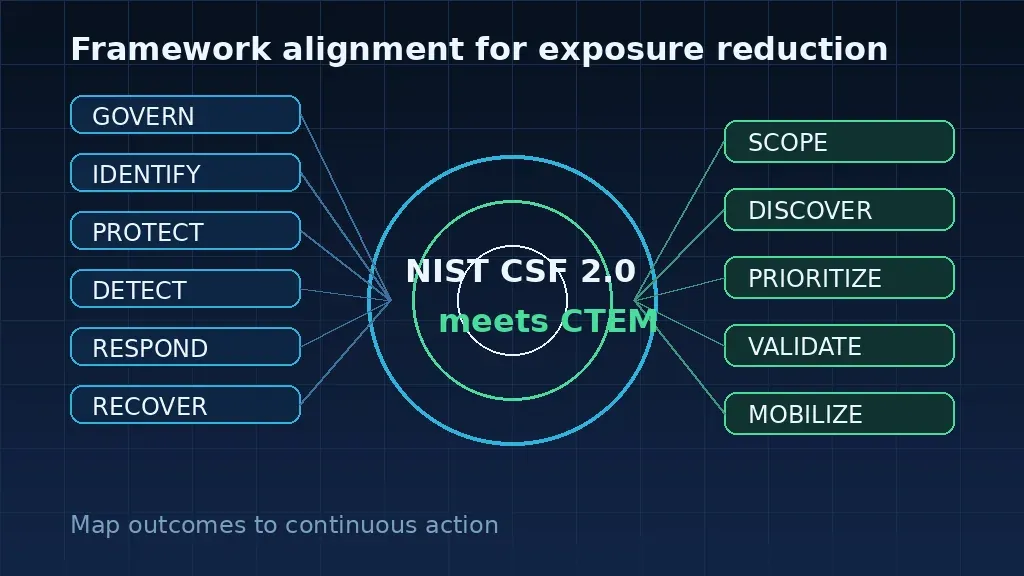
Scope critical assets and exposure paths. Define the systems and business services that matter most. Include internet-facing assets, cloud workloads, identity paths, and important controls. This keeps review work tied to harm, rather than to raw finding counts.
Discover and normalize findings. Collect exposures from scanners, cloud tools, identity systems, and other security sources. Match each finding to its affected asset and owner. Remove duplicate noise before findings reach teams that must act.
Prioritize and validate likely risk. Rank exposures by asset value, threat context, available fixes, and evidence of a usable attack route. When needed, control testing can show whether a path is practical. That check makes a remediation queue more defensible.
Send useful context into SOC tools. Feed high-priority exposure data to the operational stack. SIEM can add it to event review. XDR can use it beside detection signals across control areas. Analysts gain context when suspicious activity touches a known weak point.
Execute response and remediation. SOAR can route repeatable response steps, create tickets, or start approved actions. Asset owners can patch, change a control, or accept a documented risk. CTEM then checks whether the exposure was reduced or remains open.
SOC action without tool replacement
This sequence treats SIEM, XDR, and SOAR as operational partners, not competing answers to the same problem. SIEM supports event review, XDR strengthens detection context, and SOAR helps run repeatable actions. CTEM supplies the exposure view that guides which weaknesses need attention first.
For security leaders, the practical question is not which acronym wins. It is how detection and response connect to exposure management decisions. Build the handoffs around asset ownership, validated priorities, response approval, and proof that a fix changed risk.
Why does exposure management fill a different gap?
The question before response
SIEM, XDR, and SOAR support security operations after signals enter the workflow. SIEM organizes event data, XDR brings detection context together, and SOAR runs response tasks. A team can still face a separate question before an incident: which known exposure merits action first?
That question is not another way to compare SIEM vs XDR vs SOAR. It concerns the conditions an attacker could use, even when no active attack has been detected. Exposure management gives teams a way to examine those conditions and choose action with business context in mind.
This is why CTEM fits beside security operations tools, rather than replacing them. Detection remains needed for suspicious behavior, and orchestration remains useful once an action is chosen. CTEM focuses the work that must happen earlier: finding exposure, judging urgency, testing assumptions, and moving fixes forward.
From scope to priority
The work starts with scope. Security teams define the assets, environments, and business services that matter for review. That boundary keeps the program focused on reachable exposure tied to important operations, rather than treating every finding as equal work.
Discovery then builds a usable view of assets and findings across sources. Hive Pro's Uni5 Xposure aggregates and normalizes findings from external scanners. Once findings share a common view, teams can move from a queue of issues to a clearer exposure picture.
Prioritization asks what deserves attention now. Severity alone does not answer that operating question. Hive Pro's threat-informed prioritization brings threat and vulnerability intelligence into the decision, so remediation work can be aimed at meaningful exposure.
Validation and mobilization
A prioritized finding is still a reasoned choice, not proof of impact in that environment. Validation tests whether an exposure can support an attack path or whether a control blocks it. This step helps teams separate issues that need action from assumptions that need checking.
Hive Pro's security control validation uses simulated attacks to test controls and map attack paths to important assets. The result gives defenders a grounded basis for the next move, while SIEM and XDR keep their roles in monitoring and detection.
Mobilization turns that basis into assigned work. A CTEM workflow can pass remediation guidance and tickets into tools such as Jira or ServiceNow. SOAR can still carry out repeatable response tasks; CTEM informs which exposure reduction work should enter that path first.
In practice, the gap is a decision gap. A signal-driven stack can investigate and respond well, yet teams also need to reduce exposure before a signal appears. CTEM structures that choice through scope, discovery, priority, validation, and mobilization, while existing SOC tools continue their assigned jobs.
What should security leaders evaluate before adding CTEM?
In a SIEM vs XDR vs SOAR review, CTEM raises a different question. Can the team find, rank, validate, and reduce exposures before an active incident demands attention? Security leaders should map this need against current tools, data, and ownership before adding another operating layer.
Current exposure picture
Start with coverage, not product features. List the assets, identities, cloud services, applications, and external paths the team can see today. Then record where findings remain split across scanners, ticket queues, and asset records. A CTEM review is useful when it tests whether that view becomes clearer and easier to act on.
Next, ask what context moves an exposure ahead of another. Severity alone does not show business importance, reachable attack paths, available controls, or active threat relevance. A review of exposure management can help teams frame this gap. It does not require treating existing SOC tools as obsolete.
Telemetry, validation, and workflow
Map each existing role plainly. SIEM may hold centralized logs, XDR may join detection telemetry, and SOAR may run response tasks. CTEM evaluation should focus on what sits before and between those motions: exposure context, validated priority, and a path into remediation work.
Ask where telemetry will enter the exposure process and where decisions will return. Can asset and finding data be normalized without creating duplicate records? Can validation evidence reach analysts and owners in terms they can use? Can a prioritized exposure create a ticket, route to an owner, and keep its status visible?
The NIST Cybersecurity Framework gives teams a shared structure for managing cybersecurity risk. Use that structure to test whether exposure priorities can feed existing governance, response, and recovery work. This view keeps CTEM tied to duties that already have owners.
Handoffs that can be measured
Interoperability is more than a connector list. Require a test path from discovered exposure to context, validation, assignment, remediation, and closure evidence. Define who accepts risk, who fixes issues, and who confirms results. Also confirm what the SIEM, XDR, and SOAR teams receive at each handoff.
Set measures around work the team can inspect: assets covered, findings assigned, validation results recorded, remediation tickets linked, and closed items rechecked. Avoid buying against broad promises. A useful evaluation shows whether analysts and asset owners can follow the same priority decision from finding through action.
Leaders who need to examine that workflow in a CTEM platform can book a demo with questions prepared. Request examples of data intake, validation output, ticket handoffs, and closure reporting using the tools already in the SOC architecture.
Frequently Asked Questions
Does XDR replace SIEM?
No. XDR focuses on correlating detection data across endpoints and other security controls, while SIEM centralizes broader log and event data for monitoring, investigations, and reporting. Some organizations may reduce overlap during a platform change, but the decision depends on required data retention, compliance reporting, integrations, and analyst workflows.
Can SIEM, SOAR, and XDR be used together?
Yes. SIEM can collect and retain broad event data, XDR can correlate signals for detection and investigation, and SOAR can coordinate repeatable response actions across connected tools. Used together, they should have defined roles, shared case handling, and tested integration paths. This reduces duplicate work and helps leaders evaluate gaps instead of adding overlapping tools.
Is XDR the same as SOAR?
No. XDR is mainly a detection and investigation capability that brings together signals from multiple security domains. SOAR is mainly an orchestration capability that runs playbooks, routes cases, and performs repeatable response steps through integrations. They can share alerts and actions, but an XDR deployment does not by itself supply every workflow or governance function a SOAR program may require.
How does CTEM fit alongside SIEM, XDR, and SOAR in a SOC?
CTEM and exposure management address the pre-incident question of which weaknesses deserve action first. SIEM and XDR inform detection and investigation, while SOAR supports response workflows. A CTEM platform can consolidate exposure findings, prioritize them with threat context, and support validation and remediation. It complements the SOC stack rather than replacing detection or response tools.
Ready to add exposure context to your SOC stack?
Each planning cycle without clear exposure context can leave security teams sorting urgent priorities across tools without agreement on which issues require action first. Starting now gives security leaders time to assess their existing detection, response, and orchestration investments before the next planning decision arrives. A focused review can show where exposure management adds prioritization and validation alongside the SOC tools your team already depends on every day.
Ready to connect your SOC stack decisions to practical exposure management steps? Book a demo to evaluate how exposure management complements your existing security operations stack and plan a clearer path for focused remediation. Use the session to discuss your current tools, priorities, and operational questions with a Hive Pro specialist.